Ball Joint Drum Coupling

A ball joint drum coupling is a specialized flexible transmission component widely used in industrial machinery, designed to connect the output shaft of a reducer with a drum, transmitting torque efficiently while accommodating various misalignments and bearing radial loads. Unlike rigid couplings that require precise alignment between connected shafts, ball joint drum couplings integrate spherical hinge technology and drum-shaped transmission structures, making them ideal for harsh industrial environments where shaft misalignment, heavy loads, and continuous operation are common. This type of coupling plays a critical role in ensuring the stability and reliability of transmission systems, particularly in lifting equipment, metallurgical machinery, and other heavy-duty applications where precise torque transmission and load-bearing capacity are essential. To fully understand the value and application scope of ball joint drum couplings, it is necessary to delve into their structural composition, performance characteristics, different types, and practical applications in various industrial fields.
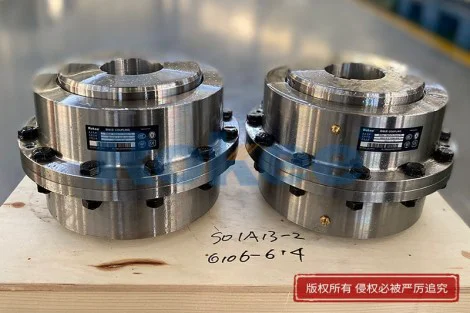
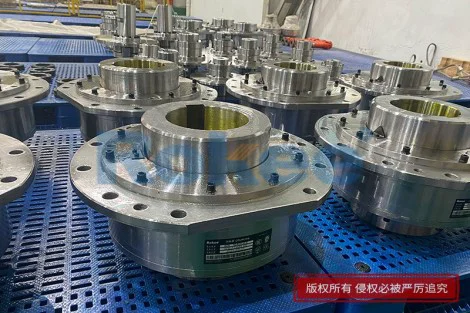
The structure of a ball joint drum coupling is meticulously designed to balance torque transmission, load-bearing capacity, and misalignment compensation, consisting of several core components that work in harmony to achieve optimal performance. At the heart of the coupling is the spherical hinge assembly, which is the key to its flexible performance. This assembly typically includes a connecting flange with an inner spherical surface and a spherical half-coupling sleeve with an outer spherical surface, forming a spherical contact pair that allows for angular and radial movement between the two components. The spherical contact design ensures that the coupling can compensate for misalignments caused by installation errors, shaft deformation, or thermal expansion, which is a significant advantage over rigid couplings that are prone to damage under such conditions. The connecting flange is usually designed to connect with the drum or the output shaft of the reducer, featuring mounting holes that facilitate secure attachment, while the spherical half-coupling sleeve is connected to the other shaft, creating a seamless connection that enables torque transmission.
In addition to the spherical hinge assembly, ball joint drum couplings also include specialized transmission keys, inner and outer limit covers, and a sealing system. The transmission keys are specially designed to fit between the connecting flange and the spherical half-coupling sleeve, ensuring reliable torque transmission without slippage even under heavy loads. These keys are engineered to withstand high shear forces, preventing deformation or breakage during operation. The inner and outer limit covers serve to protect the internal components of the coupling, preventing the ingress of dust, debris, and moisture that could damage the spherical contact surface or the transmission keys. They also help to maintain the integrity of the lubrication system, which is crucial for reducing friction and extending the service life of the coupling. The sealing system, often use a labyrinth seal design, further enhances the protection of internal components by creating a barrier against contaminants while allowing for the circulation of lubricating oil. Some designs also incorporate oil bath lubrication, which ensures that all moving parts are adequately lubricated, reducing wear and tear and improving overall performance.
The structural design of ball joint drum couplings also emphasizes compactness and ease of installation. Most models adopt a modular design, allowing for quick assembly and disassembly, which simplifies maintenance and reduces downtime in industrial settings. The compact structure ensures that the coupling can be installed in limited spaces, making it suitable for use in machinery where space is a constraint. Additionally, the absence of complex components reduces the overall weight of the coupling, which is beneficial for reducing the load on the connected shafts and the entire transmission system. The spherical hinge assembly is precision-machined to ensure smooth movement and tight contact between the spherical surfaces, minimizing friction and ensuring efficient torque transmission. The materials used in the construction of ball joint drum couplings are carefully selected based on the application requirements, with high-strength alloy steels being the most common choice due to their excellent tensile strength, wear resistance, and corrosion resistance. These materials are heat-treated to enhance their mechanical properties, ensuring that the coupling can withstand the high torques and radial loads encountered in heavy-duty industrial applications.
The performance characteristics of ball joint drum couplings are directly derived from their structural design, making them well-suited for a wide range of industrial applications. One of the most notable performance features is their excellent torque transmission capacity. The combination of the spherical hinge assembly and the specialized transmission keys allows the coupling to transmit large torques efficiently, with some models capable of handling torques ranging from 16 kN·m to 560 kN·m or more. This high torque capacity makes them ideal for use in heavy-duty machinery such as cranes, hoists, and metallurgical equipment, where large amounts of power need to be transmitted from the reducer to the drum or other working components. Unlike some other types of couplings that experience torque loss due to friction or misalignment, ball joint drum couplings maintain high transmission efficiency, ensuring that most of the power from the driving shaft is transferred to the driven shaft.
Another key performance characteristic of ball joint drum couplings is their superior misalignment compensation capability. Due to the spherical contact design between the connecting flange and the spherical half-coupling sleeve, the coupling can compensate for angular, radial, and axial misalignments between the connected shafts. Angular misalignment compensation typically ranges from ±1.5° to ±3°, depending on the model, while radial misalignment compensation can be up to ±2mm. This ability to accommodate misalignments is crucial in industrial settings where precise alignment is difficult to achieve or maintain, such as in large-scale machinery where thermal expansion or structural deformation can cause shaft misalignment. By compensating for these misalignments, the coupling reduces the additional loads exerted on the shafts, bearings, and other components of the transmission system, thereby extending their service life and reducing the risk of breakdowns.
Ball joint drum couplings also exhibit excellent radial load-bearing capacity, which is essential for applications where the coupling is required to support the weight of the drum or other components. The spherical contact pair is designed to distribute radial loads evenly across the contact surface, preventing localized stress concentrations that could lead to component failure. This radial load-bearing capacity makes the coupling suitable for use in lifting equipment, where the drum is supported by the coupling and must withstand the weight of the load being lifted. Additionally, the coupling’s ability to bear radial loads reduces the need for additional support bearings, simplifying the overall design of the transmission system and reducing costs.
Durability and reliability are also key performance attributes of ball joint drum couplings. The use of high-strength materials and precision machining ensures that the coupling can withstand the harsh conditions of industrial operation, including high temperatures, heavy vibrations, and exposure to contaminants. The lubrication system, which typically includes oil bath lubrication and a labyrinth seal, reduces friction between moving parts, minimizing wear and extending the service life of the coupling. Many models also feature a wear indicator, which provides a visual signal when the coupling components are approaching the end of their service life, allowing for timely maintenance and replacement before a breakdown occurs. This proactive maintenance capability helps to reduce unplanned downtime and ensure the continuous operation of industrial machinery.
In addition to these core performance characteristics, ball joint drum couplings also offer stable operation with low noise. The smooth meshing of the transmission components and the spherical contact design reduce vibration and noise during operation, making them suitable for use in environments where noise levels are a concern, such as in indoor manufacturing facilities or areas where workers are in close proximity to the machinery. The low vibration levels also contribute to the overall stability of the transmission system, reducing the risk of damage to other components and improving the quality of the end product in manufacturing applications.
There are several types of ball joint drum couplings available, each designed to meet specific application requirements based on torque capacity, misalignment compensation, and structural design. One common type is the spherical hinge drum coupling, which features a simple yet robust design consisting of a connecting flange with an inner spherical surface, a spherical half-coupling sleeve, and specialized transmission keys. This type of coupling is ideal for applications where moderate torque transmission and misalignment compensation are required, such as in light to medium-duty lifting equipment and general industrial machinery. It is characterized by its compact structure, easy installation, and low maintenance requirements, making it a popular choice for many industrial applications.
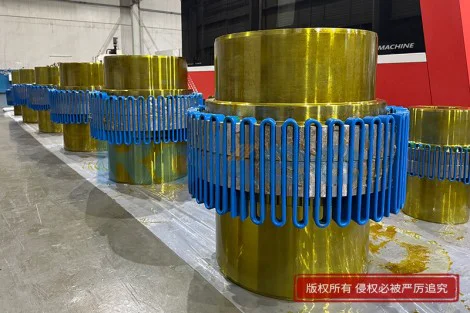
Another type of ball joint drum coupling is the ball and drum gear drum coupling, which integrates spherical drum tooth design with the spherical hinge assembly. This type of coupling features an outer sleeve with spherical drum teeth, which increases the contact area between the gear surfaces, enhancing torque transmission capacity and overload resistance. The spherical drum tooth design also improves the coupling’s ability to compensate for misalignments, making it suitable for heavy-duty applications where high torque and significant misalignments are common. Compared to standard spherical hinge drum couplings, ball and drum gear drum couplings offer a 30% or more increase in bearing capacity, making them ideal for use in large-scale cranes, metallurgical rolling machinery, and other heavy-duty equipment. The innovative spherical sealing technology used in this type of coupling ensures excellent lubrication retention, further extending its service life.
Spherical roller drum couplings are another variant of ball joint drum couplings, featuring a jacket with a connecting flange, spherical rollers, a half-coupling, inner and outer cover plates, and a sealing system. This type of coupling uses spherical rollers to transmit torque and bear radial loads, offering high torque capacity and excellent misalignment compensation. The spherical rollers are designed to roll smoothly between the jacket and the half-coupling, reducing friction and wear and ensuring stable operation. Spherical roller drum couplings are particularly suitable for applications where high radial loads and moderate angular misalignments are present, such as in conveyor systems, mining equipment, and heavy-duty manufacturing machinery. Some models of spherical roller drum couplings also feature an involute spline pair design for connecting the coupling to the reducer output shaft, enhancing the reliability and stability of the connection.
Each type of ball joint drum coupling has its own unique advantages and limitations, and the selection of the appropriate type depends on the specific application requirements, including torque capacity, radial load, misalignment compensation needs, and operating environment. For example, light-duty applications with moderate torque and misalignment may require a standard spherical hinge drum coupling, while heavy-duty applications with high torque and significant misalignments may benefit from a ball and drum gear drum coupling or a spherical roller drum coupling. The choice of coupling type also depends on the size and weight of the machinery, as well as the maintenance requirements and operating costs.
The applications of ball joint drum couplings are diverse, spanning across various industrial sectors where torque transmission, load-bearing, and misalignment compensation are critical. One of the most common applications is in lifting equipment, including overhead cranes, gantry cranes, and hoists. In these applications, the coupling connects the reducer output shaft to the wire rope drum, transmitting torque to rotate the drum and lift heavy loads. The radial load-bearing capacity of the coupling allows it to support the weight of the drum and the load, while the misalignment compensation capability accommodates any shaft misalignments caused by the movement of the crane or the weight of the load. This ensures the safe and efficient operation of the lifting equipment, reducing the risk of accidents and equipment failure.
Metallurgical machinery is another key application area for ball joint drum couplings. In metallurgical processes such as steel rolling, the coupling is used to connect the reducer to the rolling mill rolls, transmitting the high torque required to deform the metal. The harsh operating environment in metallurgical plants, including high temperatures, heavy vibrations, and exposure to dust and debris, requires a coupling that is durable, reliable, and capable of withstanding extreme conditions. Ball joint drum couplings, with their high torque capacity, excellent misalignment compensation, and robust construction, are well-suited for this application. They help to ensure the stable operation of the rolling mill, improving production efficiency and product quality.
Ball joint drum couplings are also widely used in material handling equipment, such as conveyor systems and bucket elevators. In conveyor systems, the coupling connects the motor and reducer to the conveyor drum, transmitting torque to drive the conveyor belt. The misalignment compensation capability of the coupling accommodates any misalignments between the motor, reducer, and conveyor drum, ensuring smooth operation and reducing wear on the conveyor components. In bucket elevators, the coupling connects the reducer to the elevator drum, transmitting torque to lift and transport materials such as grains, coal, and minerals. The radial load-bearing capacity of the coupling supports the weight of the drum and the materials, while the durable construction ensures long-term operation in harsh material handling environments.
Other industrial applications of ball joint drum couplings include mining equipment, construction machinery, and marine equipment. In mining equipment, such as crushers and excavators, the coupling is used to transmit torque from the motor to the working components, withstanding high loads and harsh operating conditions. In construction machinery, such as concrete mixers and cranes, the coupling ensures reliable torque transmission and misalignment compensation, contributing to the efficient operation of the equipment. In marine equipment, such as ship cranes and winches, the coupling is designed to withstand the corrosive marine environment, with corrosion-resistant materials and robust sealing systems ensuring long-term reliability.
In addition to these industrial applications, ball joint drum couplings are also used in specialized equipment such as wind turbines and solar tracking systems. In wind turbines, the coupling connects the gearbox to the generator, transmitting the torque generated by the wind turbine blades to the generator. The misalignment compensation capability of the coupling accommodates any misalignments caused by the movement of the wind turbine tower or the rotation of the blades, ensuring efficient power generation. In solar tracking systems, the coupling connects the motor to the tracking mechanism, transmitting torque to adjust the position of the solar panels, maximizing the absorption of solar energy. The compact design and reliable performance of ball joint drum couplings make them suitable for these specialized applications, where space is limited and reliability is critical.
The widespread use of ball joint drum couplings in various industrial sectors is a testament to their versatility, reliability, and performance. Their ability to transmit large torques, bear radial loads, and compensate for misalignments makes them an essential component in modern industrial transmission systems. As industrial machinery becomes more advanced and demanding, the design and performance of ball joint drum couplings continue to evolve, with manufacturers incorporating new materials, technologies, and design features to meet the changing needs of the industry. For example, the use of advanced materials such as carbon fiber composites is being explored to reduce the weight of the coupling while maintaining its strength and durability. Additionally, the integration of smart sensors into the coupling is being considered to monitor its performance in real-time, providing early warning of potential issues and enabling predictive maintenance.
In conclusion, ball joint drum couplings are a critical component in industrial transmission systems, offering a unique combination of torque transmission capacity, radial load-bearing capability, and misalignment compensation. Their structural design, which integrates spherical hinge technology and specialized transmission components, ensures reliable and efficient operation in a wide range of industrial applications. The different types of ball joint drum couplings available cater to various application requirements, from light-duty to heavy-duty, making them versatile and adaptable to different industrial environments. Whether in lifting equipment, metallurgical machinery, material handling systems, or specialized applications such as wind turbines, ball joint drum couplings play a vital role in ensuring the stability, reliability, and efficiency of industrial operations. As the industrial sector continues to grow and evolve, the demand for high-performance ball joint drum couplings is expected to increase, driving further innovations in their design and performance.