Gear Coupling Solves Transmission Deviation Problem Of PU Sandwich Panel Production Line
In the modern industrial production system, the PU sandwich panel production line plays a crucial role in the construction, cold storage, and industrial building fields, with its core advantage lying in the efficient production of panels with excellent thermal insulation, sound insulation, and structural performance. However, during the long-term high-load and continuous operation of the production line, transmission deviation has become a common and troublesome problem that seriously affects production efficiency, product quality, and equipment service life. Transmission deviation refers to the phenomenon that the relative position between the driving shaft and the driven shaft deviates from the ideal state during the power transmission process, resulting in uneven operation of each component of the production line, inaccurate material conveying, and inconsistent product dimensions. This problem not only increases the rate of defective products but also accelerates the wear of mechanical components, increases maintenance costs, and even leads to unexpected production shutdowns in severe cases. In response to this challenge, the gear coupling, as a key component in the mechanical transmission system, has gradually become the core solution to solve the transmission deviation problem of the PU sandwich panel production line due to its unique structural characteristics and excellent transmission performance. It effectively compensates for various deviations during operation, ensures stable and precise power transmission, and provides a reliable guarantee for the efficient and high-quality operation of the production line.
To understand how gear couplings solve the transmission deviation problem of PU sandwich panel production line, it is first necessary to clarify the causes and specific manifestations of transmission deviation in such production lines. PU sandwich panel production is a complex continuous operation process, involving multiple links such as material uncoiling, feeding, compounding, foaming, curing, and cutting. Each link relies on the coordinated operation of multiple transmission components, and any slight deviation in the transmission process will be amplified step by step, affecting the final product quality. The main causes of transmission deviation can be divided into three categories: mechanical factors, installation factors, and environmental factors. From the perspective of mechanical factors, long-term high-load operation will lead to wear of transmission components such as bearings, shafts, and couplings, resulting in increased gaps between components and reduced transmission accuracy. For example, the wear of the coupling itself will cause loose connection between the driving shaft and the driven shaft, leading to radial or axial displacement during rotation. In addition, the deformation of the frame of the production line due to long-term stress will also affect the coaxiality of the transmission shaft, resulting in angular deviation. From the perspective of installation factors, the coaxiality of the driving shaft and the driven shaft does not meet the requirements during the initial installation of the production line, or the foundation settles after long-term operation, which will cause the relative position of the transmission shaft to deviate. Improper installation of components such as bearings and brackets will also lead to uneven force on the transmission system, resulting in transmission deviation. From the perspective of environmental factors, the production environment of PU sandwich panels often has certain temperature changes. The thermal expansion and contraction of metal components under temperature changes will cause slight changes in the length and position of the transmission shaft, leading to temporary transmission deviation. In addition, dust, debris, and other impurities in the production environment may enter the transmission components, affecting the smooth operation of the components and indirectly causing transmission deviation.
The specific manifestations of transmission deviation in the PU sandwich panel production line are diverse and directly affect the normal operation of the production line and product quality. In the material uncoiling link, transmission deviation will lead to uneven tension of the color steel plate or insulation material, resulting in wrinkles, edge warping, or uneven width of the material, which will affect the subsequent compounding effect. In the compounding link, if there is deviation in the transmission of the upper and lower layers of the plate, it will cause misalignment of the upper and lower plates, resulting in uneven thickness of the PU sandwich panel, inconsistent edge alignment, and even delamination of the panel. In the foaming and curing link, the uneven operation of the conveyor belt caused by transmission deviation will lead to uneven foaming of the PU core material, uneven density distribution, and reduced thermal insulation performance of the panel. In the cutting link, transmission deviation will cause inaccurate cutting dimensions, inconsistent length and width of the finished panel, failure to meet the design requirements, and an increase in the defective product rate. In addition, transmission deviation will also cause abnormal vibration and noise of the production line, accelerate the wear of components such as motors, reducers, and bearings, shorten the service life of the equipment, and increase the frequency of maintenance and the cost of spare parts. It can be seen that solving the transmission deviation problem is crucial to improving the production efficiency and product quality of the PU sandwich panel production line and reducing production costs.
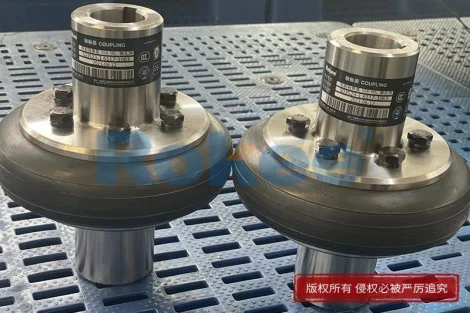
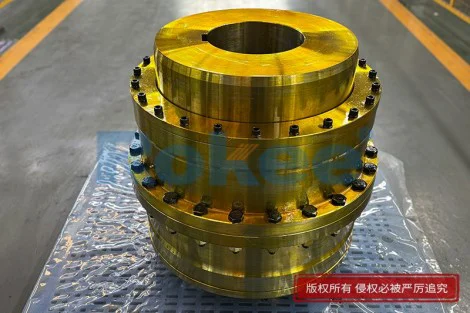
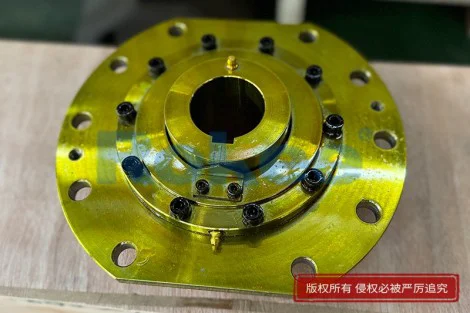
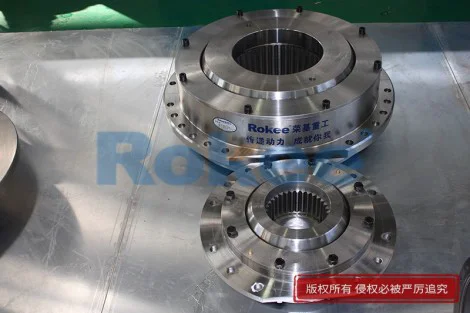
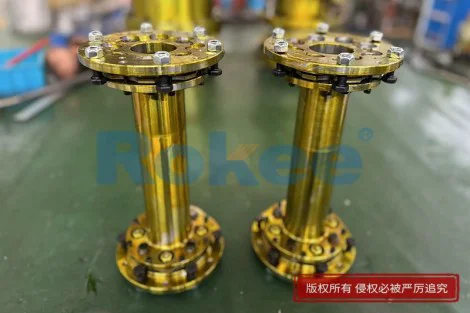
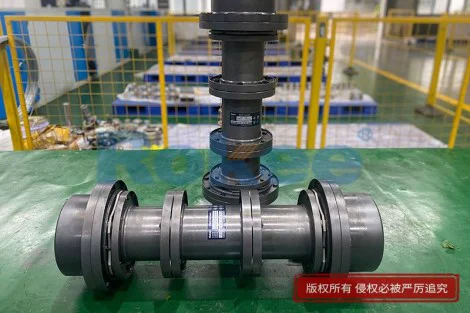
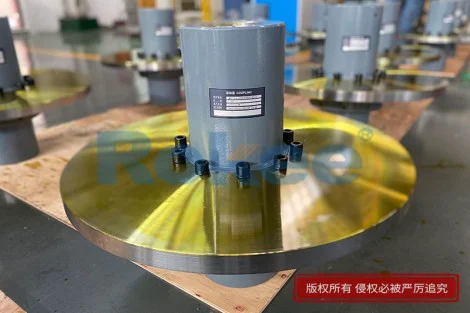
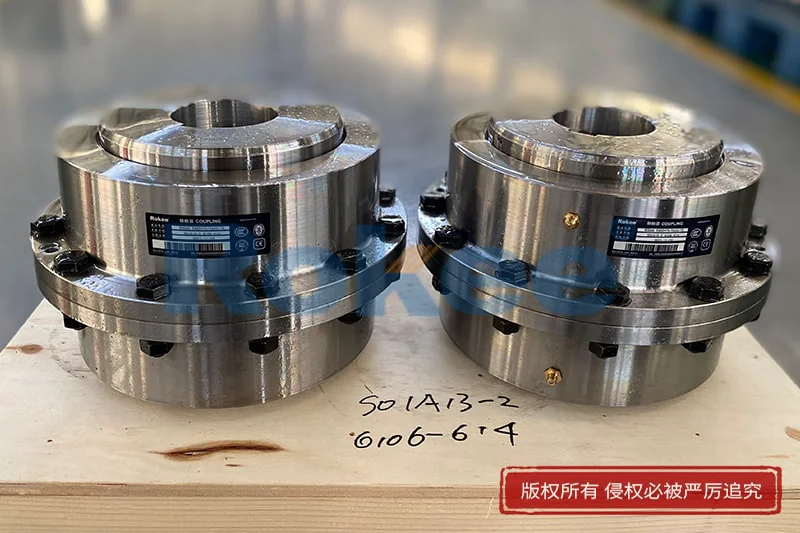
Against this background, gear couplings have shown unique advantages in solving the transmission deviation problem of PU sandwich panel production lines. Gear couplings are a type of rigid movable coupling that relies on gear meshing to transmit torque. Their core structure includes external gears, internal gears, half-couplings, sealing devices, and lubrication systems. The external gear is usually connected to the shaft end through interference fit or key connection, and the internal gear is fixed on the half-coupling. The meshing of the internal and external gears realizes the transmission of torque, while the structural design of the gears allows a certain amount of displacement compensation, which can effectively absorb various deviations generated during the operation of the production line. Compared with other types of couplings, gear couplings have the characteristics of strong load-bearing capacity, excellent deviation compensation performance, high transmission accuracy, and good structural stability, which are perfectly adapted to the working conditions of high load, continuous operation, and easy generation of transmission deviation in PU sandwich panel production lines.
The key to gear couplings solving the transmission deviation problem lies in their excellent displacement compensation capacity, which can effectively compensate for radial, axial, and angular deviations generated during the operation of the PU sandwich panel production line. Radial deviation refers to the deviation of the center line of the driving shaft and the driven shaft in the radial direction, which is a common type of transmission deviation in the production line, mainly caused by component wear, frame deformation, and improper installation. The gear coupling adopts the design of involute gear teeth, and the meshing gap between the internal and external gears allows the radial movement of the shaft within a certain range. When radial deviation occurs, the gear teeth can still maintain good meshing, ensuring the stable transmission of torque without causing additional stress to the transmission system. The radial compensation range of general gear couplings can reach 0.2-5mm, which can fully meet the radial deviation compensation needs of PU sandwich panel production lines. Axial deviation refers to the relative displacement of the driving shaft and the driven shaft in the axial direction, which is mainly caused by thermal expansion and contraction of components, vibration, and other factors. The gear coupling can realize axial compensation through the axial movement of the gear teeth in the meshing process. The axial compensation range is usually 3-30mm, which can effectively absorb the axial displacement generated by the transmission shaft due to temperature changes or vibration, avoid the occurrence of stuck or worn components, and ensure the smooth operation of the transmission system. Angular deviation refers to the deviation of the center line of the driving shaft and the driven shaft at a certain angle, which is mainly caused by improper installation, foundation settlement, and other factors. The gear coupling, especially the crowned gear coupling, has a better angular compensation capacity. The crowned tooth surface design makes the gear teeth contact more evenly, and can still maintain stable meshing when there is an angular deviation, reducing the stress concentration on the gear teeth and ensuring the accuracy of torque transmission. The angular compensation range can reach 0.5°-2°, which can effectively solve the angular deviation problem in the PU sandwich panel production line.
In addition to excellent deviation compensation capacity, the high transmission accuracy of gear couplings also provides a strong guarantee for solving the transmission deviation problem of PU sandwich panel production lines. The gear teeth of gear couplings are processed by high-precision equipment, and the tooth pitch error, tooth profile error, and other indicators are strictly controlled, ensuring that the transmission efficiency can reach more than 99.5% and the transmission error is extremely small. In the PU sandwich panel production line, the precise transmission of power is crucial for the coordinated operation of each link. For example, in the cutting link, the precise rotation of the cutting knife relies on the accurate transmission of the gear coupling to ensure that the cutting dimensions are accurate. In the compounding link, the synchronous operation of the upper and lower transmission shafts relies on the high-precision transmission of the gear coupling to avoid misalignment of the panels. The high transmission accuracy of the gear coupling can effectively reduce the cumulative error in the transmission process, ensure that each component of the production line operates in a coordinated and consistent manner, and fundamentally reduce the occurrence of transmission deviation. At the same time, the gear coupling has a strong load-bearing capacity, which can bear large rated torque and short-term overload torque, and its rated torque range can cover several thousand N·m to several hundred thousand N·m, which is fully adapted to the high-load working conditions of the PU sandwich panel production line. During the production process, the production line needs to drive multiple components such as conveyor belts, rollers, and cutting knives, which requires the coupling to have sufficient load-bearing capacity to ensure stable power transmission. The gear coupling can stably transmit large torque under high-load conditions, avoid slipping or damage due to insufficient load-bearing capacity, and further ensure the stability of the transmission system and reduce transmission deviation.
The structural stability and durability of gear couplings also play an important role in solving the transmission deviation problem of PU sandwich panel production lines. The core components of gear couplings are made of high-quality alloy steel, which is processed by multiple heat treatment processes such as quenching, tempering, and carburizing, making the gear teeth have high hardness, wear resistance, and fatigue resistance. This enables the gear coupling to operate stably for a long time under harsh working conditions such as high load, high speed, and dust, and is not easy to wear or damage, ensuring the long-term stability of the transmission system. The sealing device of the gear coupling can effectively prevent dust, debris, and other impurities from entering the gear meshing part, avoid wear of the gear teeth, and ensure the smooth operation of the coupling. The lubrication system of the gear coupling can reduce the friction between the gear teeth, reduce wear, and at the same time play a role in cooling, vibration reduction, and noise reduction, further improving the stability and service life of the coupling. Compared with other types of couplings that have easy-to-wear elastic components, the gear coupling has no easy-to-wear parts, low failure rate, and simple daily maintenance. Only regular lubrication and inspection are required to ensure its normal operation, which can reduce the frequency of equipment maintenance and the downtime caused by maintenance, and ensure the continuous and stable operation of the PU sandwich panel production line.
In practical applications, the rational selection and installation of gear couplings are crucial to solving the transmission deviation problem of PU sandwich panel production lines. When selecting a gear coupling, it is necessary to comprehensively consider the working conditions of the production line, such as the rated torque, rotational speed, deviation range, and environmental temperature, to select a coupling that matches the actual needs. For example, in the links with large angular deviation, a crowned gear coupling with better angular compensation capacity should be selected; in the links with high transmission accuracy requirements, a gear coupling with higher processing precision should be selected. During the installation process, it is necessary to strictly control the coaxiality of the driving shaft and the driven shaft, and adjust the position of the coupling to ensure that the deviation is within the allowable range. At the same time, attention should be paid to the tightness of the connection bolts to avoid loosening due to vibration during operation, which will cause transmission deviation. In addition, regular maintenance of the gear coupling is also necessary, including regular lubrication, inspection of the wear of the gear teeth, and inspection of the sealing device. Timely replacement of worn components and supplement of lubricating oil can ensure the long-term stable operation of the gear coupling and maintain its excellent deviation compensation capacity and transmission accuracy.
The application of gear couplings in PU sandwich panel production lines has achieved remarkable results in solving the transmission deviation problem. Many production enterprises have improved the stability of the transmission system and reduced the occurrence of transmission deviation after replacing the original coupling with a gear coupling, which has brought significant economic benefits. For example, a PU sandwich panel production enterprise was once troubled by serious transmission deviation in the compounding link, resulting in a defective product rate of more than 8%, and frequent maintenance of the transmission system, which seriously affected production efficiency. After adopting gear couplings, the transmission deviation of the compounding link was effectively controlled, the defective product rate was reduced to less than 1.5%, the frequency of equipment maintenance was reduced by more than 60%, the production efficiency was increased by nearly 20%, and the production cost was significantly reduced. Another enterprise had the problem of inaccurate cutting dimensions caused by transmission deviation in the cutting link, which led to a large number of unqualified products and difficulty in meeting customer needs. After installing gear couplings, the transmission accuracy of the cutting link was greatly improved, the cutting dimension error was controlled within the allowable range, the product qualification rate was close to 100%, and customer satisfaction was significantly improved. These practical cases fully prove that gear couplings can effectively solve the transmission deviation problem of PU sandwich panel production lines, improve production efficiency and product quality, and reduce production costs.
With the continuous development of the PU sandwich panel industry, the requirements for production efficiency and product quality are getting higher and higher, and the problem of transmission deviation will become more and more prominent, which puts forward higher requirements for the performance of gear couplings. In the future, with the continuous progress of material technology and processing technology, gear couplings will be further optimized and upgraded. For example, the use of new high-strength and wear-resistant materials can further improve the load-bearing capacity and service life of the coupling; the adoption of more precise processing technology can improve the transmission accuracy and deviation compensation capacity of the coupling; the integration of intelligent monitoring technology can realize real-time monitoring of the operation status of the coupling, timely find potential faults, and carry out predictive maintenance, which can further ensure the stable operation of the transmission system. At the same time, with the popularization of intelligent production, gear couplings will be more closely integrated with the intelligent control system of the production line, realizing the coordinated control of the transmission system and the whole production line, further improving the automation level and production efficiency of the PU sandwich panel production line.
In conclusion, transmission deviation is a key problem affecting the efficient and high-quality operation of the PU sandwich panel production line, which not only reduces production efficiency and product quality but also increases production costs. Gear couplings, with their excellent deviation compensation capacity, high transmission accuracy, strong load-bearing capacity, and good structural stability, have become an ideal solution to solve this problem. By effectively compensating for radial, axial, and angular deviations generated during the operation of the production line, gear couplings ensure the stable and precise transmission of power, reduce the occurrence of transmission deviation, and provide a reliable guarantee for the continuous and efficient operation of the PU sandwich panel production line. In practical applications, through rational selection, correct installation, and regular maintenance of gear couplings, enterprises can effectively solve the transmission deviation problem, improve production efficiency and product quality, reduce production costs, and enhance their market competitiveness. With the continuous progress of technology, gear couplings will play a more important role in the PU sandwich panel production industry, promoting the healthy and sustainable development of the industry.