Gantry Crane Drum Coupling

The gantry crane drum coupling serves as a critical transmission component within the hoisting mechanism, bridging the output end of the speed reducer and the winding drum that stores and releases steel wire ropes. Unlike general-purpose shaft couplings used in light machinery, this component is engineered specifically for low-speed, heavy-load cyclic working environments where sudden load fluctuations and repeated start-stop actions occur constantly. Its primary responsibility is to transfer rotational torque generated by the driving system to the drum, converting rotary motion into the lifting or lowering movement of suspended cargo. During gantry crane operation, the drum also undergoes slight positional shifts under the weight of heavy loads, thermal expansion of metal structures, and elastic deformation of the supporting frame. The coupling absorbs these minor displacements instead of passing bending stress back to the reducer bearings and gear sets. Without this intermediate buffer, rigid direct connection would lead to concentrated stress on adjacent shafts, accelerating fatigue damage and raising the risk of unexpected downtime. Every lifting cycle places alternating impact loads on the coupling, so material toughness and surface durability become essential design priorities to maintain continuous and secure power transfer across long operating hours.
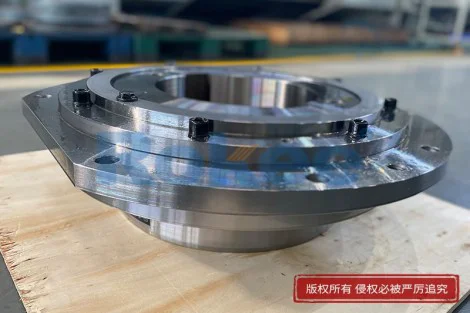
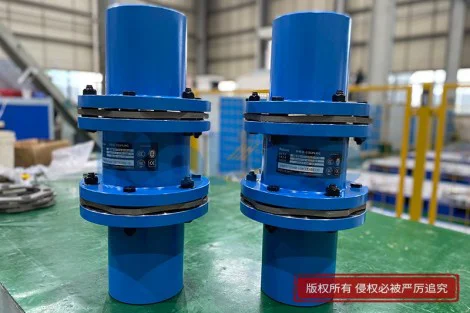
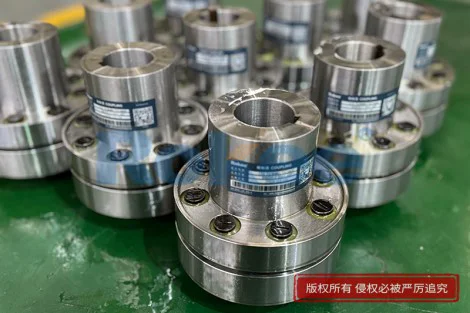
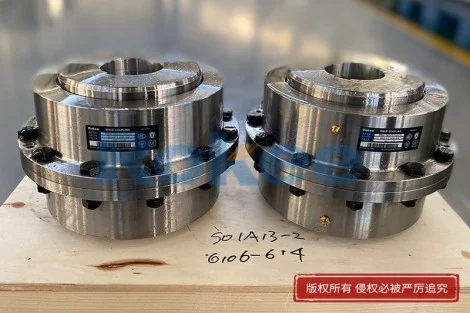
The physical structure of a gantry crane drum coupling consists of several precisely machined core assemblies, each performing a defined mechanical task. The most distinctive element is the crowned external gear hub, whose curved tooth profile meshes with an internally toothed outer sleeve. This outer sleeve often integrates a flange face for fastening to the drum, and some versions combine a braking surface on the exterior to work with the hoist brake assembly. Supporting rings, sealing components, end covers, and grease filling ports complete the assembly. The crowned tooth geometry enables multi-directional misalignment compensation. When the reducer shaft and drum shaft deviate in angle, radial position or axial distance, the curved tooth surfaces slide moderately while still maintaining full torque transmission. Seals play a vital role in preserving internal lubrication, keeping grease trapped inside the meshing zone while blocking dust, moisture and abrasive particles from the outdoor work environment. Small structural features such as vent holes help balance internal pressure generated during operation, preventing seal damage caused by thermal expansion of lubricant inside the enclosed cavity.
The working principle of the gantry crane drum coupling relies on controlled meshing contact between internal and external gear teeth rather than fixed rigid locking. As the reducer output shaft rotates, torque transfers through the external gear hub to the outer sleeve, which then drives the winding drum to revolve. The barrel-shaped profile of the external teeth distributes contact pressure evenly across tooth surfaces when misalignment appears, avoiding point loading that could create microcracks and pitting. When the gantry crane lifts heavy cargo, instantaneous torque peaks occur at the moment of load take-up; the flexible gear mesh absorbs part of this impact energy, smoothing the shock delivered to the reducer and motor. When lowering loads, the power flow reverses, and the coupling must reliably transmit reverse torque without backlash-induced hammering between teeth. This bidirectional load capacity is indispensable because hoisting equipment regularly switches between upward and downward movement. The relative sliding permitted between meshing surfaces compensates for mechanical misalignment that arises from assembly tolerances, structural deflection under load and gradual foundation settlement over years of use.
Material selection for gantry crane drum couplings focuses on balancing high strength, wear resistance and impact toughness. The gear hubs and outer sleeve are typically produced from forged alloy steel, as forging eliminates internal voids and improves grain flow compared with cast alternatives, delivering better fatigue resistance under cyclic impact loads. After rough machining, critical tooth surfaces receive heat treatment to achieve suitable surface hardness while keeping the core material ductile. Surface hardening protects the contact areas from abrasion and pitting during repeated meshing, while the softer inner core prevents brittle fracture when sudden overload strikes. Sealing rings are made from durable elastomer compounds resistant to temperature changes, grease swelling and ultraviolet degradation, which is especially important for gantry cranes exposed to open-air conditions. Fasteners connecting flanges use high-strength alloy materials to resist loosening under continuous vibration. Improper material choices or inadequate heat treatment can lead to premature tooth chipping, seal degradation and fastener failure, all of which threaten operational safety. Every material choice considers the combined effects of heavy static loads, dynamic shock, temperature variation and environmental contaminants.
Installation of a gantry crane drum coupling demands careful alignment and controlled assembly procedures to maximize service life. Before fitting, technicians inspect all machined surfaces for scratches, burrs or corrosion that might interfere with meshing or sealing. The reducer and drum mounting positions are adjusted to minimize initial shaft misalignment, even though the coupling can accommodate limited displacement. Excessive misalignment beyond the designed range will drastically amplify tooth contact stress, generate excess heat and wear components rapidly. Lubricant is added to the enclosed gear cavity before final assembly; the quantity must be precise, as overfilling causes churning losses and overheating while insufficient grease leads to metal-to-metal contact and accelerated abrasion. Fasteners are tightened in a cross-sequence to distribute clamping force evenly across the flange joint, avoiding warping of the coupling body. Once assembly finishes, manual rotation checks verify smooth movement without binding or abnormal resistance. Initial no-load test runs are performed before lifting rated loads, allowing operators to listen for unusual noise and monitor temperature rise at the coupling housing. Proper installation reduces long-term maintenance burdens and prevents avoidable component degradation.
Lubrication management represents one of the most important daily maintenance tasks for gantry crane drum couplings. The meshing gear teeth inside the coupling depend entirely on lubricating grease to separate metal surfaces, reduce friction and dissipate heat produced during power transmission. Operating in outdoor sites, gantry cranes face fluctuating ambient temperatures, which affects grease viscosity. Low temperatures thicken lubricant and restrict flow into tooth contact zones, while high temperatures can thin grease and shorten its service life. Routine maintenance includes checking grease volume and condition at scheduled intervals. If grease becomes contaminated with metal particles, water or grit, it loses its protective properties and must be fully drained and replaced. Seal inspection accompanies every lubrication service; leaking grease signals damaged seals that permit debris ingress. Over time, fine metallic wear particles accumulate in the grease, serving as an early warning of tooth surface degradation. Maintaining a clean, properly replenished lubrication environment directly extends coupling service life and prevents catastrophic tooth failure under heavy lifting loads.
Common operational faults of the gantry crane drum coupling manifest through observable symptoms that trained operators can detect during routine inspections. Abnormal knocking or grinding noise usually indicates inadequate lubrication, severe tooth wear or excessive backlash between meshing gear surfaces. Rising housing temperature points to overloading, poor alignment, degraded lubricant or binding caused by foreign material trapped inside the coupling. Vibration transmitted through the reducer and drum assembly often appears when misalignment grows beyond allowable limits or when gear teeth develop uneven wear patterns. Visible grease leakage signals seal failure, which must be addressed promptly to stop contamination entering the gear mesh. In advanced stages of wear, pitting, spalling or cracking develops on tooth surfaces. These defects reduce the effective load-bearing area and create localized stress concentrations. Many of these faults develop gradually rather than instantly, so regular monitoring can identify issues before they escalate into sudden component breakage that drops suspended loads and causes extensive secondary damage to the entire hoisting mechanism.
Load characteristics of gantry crane operations impose unique design constraints on drum couplings that distinguish them from couplings in continuous-running industrial equipment. Gantry cranes work intermittently, with frequent starts, stops and load reversals. Each hoist cycle creates transient torque spikes far above steady operating torque, and the coupling must withstand repeated shock loading. Load magnitudes also vary widely, from light empty-hook movements to maximum rated cargo lifts. When the crane trolley travels across the gantry frame, dynamic inertial forces combine with lifting loads and introduce additional side loads and bending moments onto the coupling assembly. The coupling must not only transmit torque but also maintain stable meshing under these combined forces. Long-term cyclic loading gradually induces metal fatigue, so design calculations account for fatigue accumulation over millions of working cycles. Overload incidents, even brief ones, create residual stress inside gear teeth and can initiate cracks that propagate slowly over subsequent lifting operations. Understanding these variable load conditions guides proper component sizing and operational limits for the whole gantry crane hoist system.
Condition monitoring techniques support predictive maintenance for gantry crane drum couplings, shifting management from simple breakdown repair to scheduled proactive inspection. Visual inspection checks for seal leaks, surface discoloration from overheating, loose fasteners and abnormal flange movement. Vibration measurement captures frequency signatures associated with gear tooth wear, misalignment and loose components, revealing early-stage degradation that may not produce obvious audible noise. Temperature tracking identifies abnormal heat buildup before visible damage appears. Oil or grease analysis extracts particle count and composition data, where metallic debris content indicates tooth surface wear rate. Some designs integrate mechanical wear indicators that show remaining usable travel as gear teeth wear down. Data gathered through these methods helps maintenance teams judge remaining service life and plan replacement during convenient downtime windows, rather than reacting to sudden failure. Continuous monitoring reduces unplanned shutdowns and improves overall site productivity while preserving safe crane operation during heavy cargo handling tasks.
The replacement and retirement criteria for gantry crane drum couplings focus on identifying irreversible mechanical damage that compromises load-carrying capacity. When inspection reveals deep tooth pitting, surface spalling, visible cracks or significant tooth thickness reduction, the coupling must be removed from service. Excessive backlash beyond acceptable limits means tooth profiles have worn away and can no longer distribute impact loads safely during start-stop cycles. Bent or deformed flanges, permanent damage to sealing grooves, or cracks originating at fastener holes also require full assembly replacement rather than local repair. During replacement, technicians examine mating shafts and adjacent reducer bearings for secondary damage caused by the failed coupling. The new coupling undergoes careful alignment, lubrication filling and functional testing before returning the gantry crane to service. Retired couplings cannot be returned to operation even after surface refinishing, as fatigue damage inside the metal structure remains invisible and can lead to sudden fracture under heavy load. Proper retirement practices protect personnel and equipment, ensuring the power transmission chain within the hoisting mechanism maintains reliable performance through decades of demanding gantry crane work.