Flexible Diaphragm Coupling Working Principle
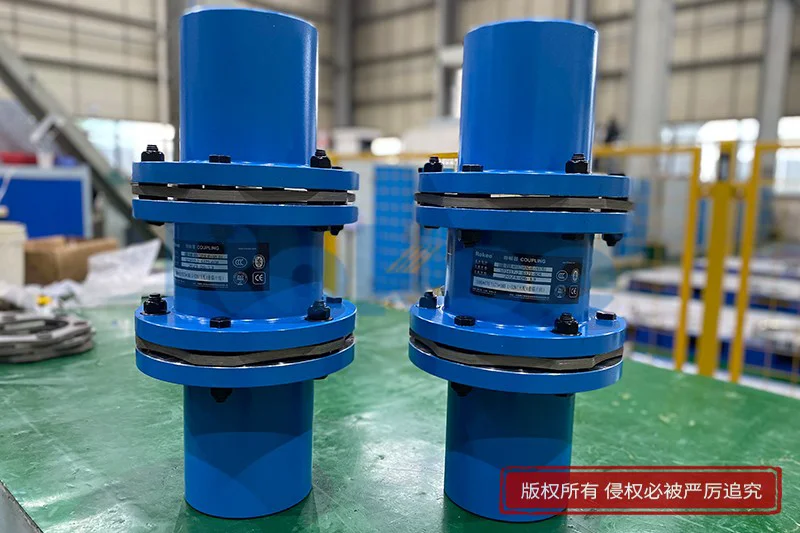
Flexible diaphragm coupling is a high-efficiency, low-wear power transmission component widely adopted in modern mechanical transmission systems, relying on the elastic deformation characteristics of thin metal diaphragms to realize stable torque transmission and automatic shaft misalignment compensation. Unlike traditional flexible couplings that rely on rubber or spring deformation, this coupling adopts all-metal structural design, featuring zero transmission clearance, no sliding friction between parts, and lubrication-free operation throughout its service life. In practical mechanical operation, absolute coaxial alignment between driving and driven shafts is unattainable due to machining tolerances, assembly deviations, thermal expansion and mechanical vibration. The core working value of flexible diaphragm coupling lies in its ability to adaptively offset axial, radial and angular misalignments through reversible elastic deformation of diaphragm groups while maintaining continuous and accurate power transmission, ensuring the stability and reliability of high-speed and high-precision mechanical equipment operation.
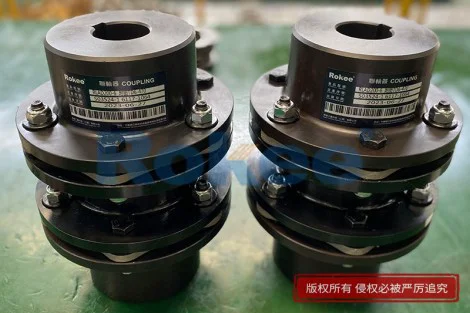
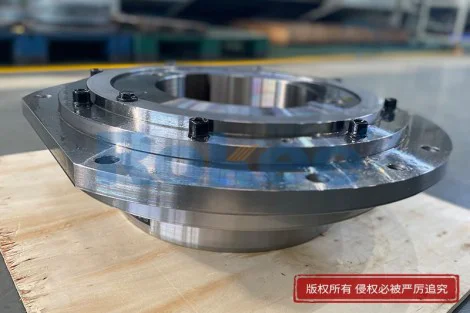
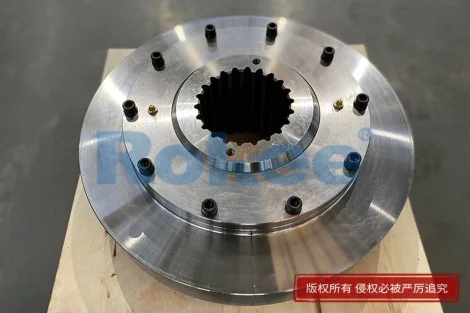
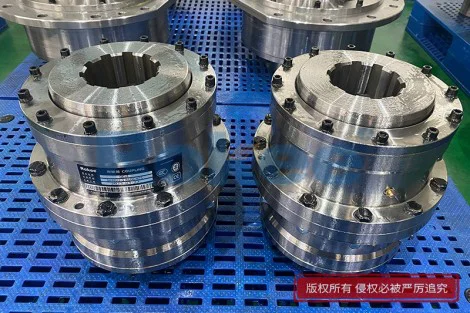
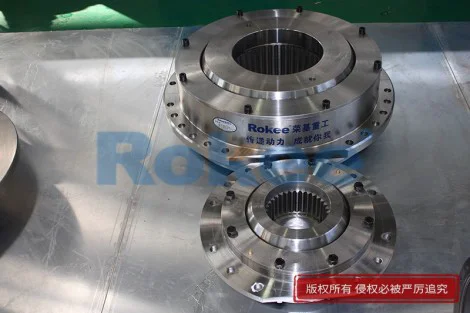
The basic structural composition of flexible diaphragm coupling lays a solid foundation for its unique working mechanism, with all core components cooperating closely to complete torque transmission and deviation compensation. The main components include left and right wheel hubs, stacked metal diaphragm groups, high-strength fastening bolts and optional intermediate sleeves for enhanced models. Each component undertakes distinct functional responsibilities during operation: wheel hubs serve as the connecting base with driving and driven shafts, fixing the overall coupling structure on the transmission shaft system; diaphragm groups, composed of multiple ultra-thin high-strength metal sheets, are the core functional units bearing elastic deformation and torque conduction; evenly distributed fastening bolts connect diaphragms and wheel hubs into an integrated structure, avoiding relative displacement and transmission gaps during rotation. For improved structural designs with intermediate sleeves, the component separates the front and rear diaphragm groups at a reasonable distance, expanding the spatial range of elastic deformation and further optimizing the coupling’s ability to adapt to multi-dimensional shaft misalignment. The overall integrated assembly structure eliminates movable friction accessories, fundamentally reducing operational wear and laying the groundwork for long-term stable operation in complex working environments.
The core power transmission process of flexible diaphragm coupling follows the mechanical law of elastic force conduction and structural linkage, achieving efficient and lossless torque transfer between shaft systems. When mechanical equipment starts running, the driving shaft generates rotational torque and transmits the power to the coupling’s driving wheel hub. Fixed by high-strength bolts, the driving wheel hub drives the connected diaphragm group to rotate synchronously, and the torque is evenly distributed to each metal diaphragm sheet through the bolt connection points. Under the action of rotational torque, the diaphragm group produces micro elastic deformation along the rotation direction, converting the rotational force of the driving end into elastic structural force, and then transmits the torque to the driven wheel hub through the deformed diaphragm structure. Finally, the driven wheel hub drives the driven shaft to rotate synchronously, completing the entire power transmission cycle. Throughout the process, the metal diaphragm maintains rigid torque bearing capacity under normal load conditions, ensuring no power loss or rotation delay. The uniform stress distribution of stacked diaphragms avoids local stress concentration, enabling the coupling to continuously and stably transmit torque under long-term cyclic operation.
Adaptive compensation of shaft misalignment is the most distinctive functional feature of flexible diaphragm coupling, realized by the controllable elastic deformation of metal diaphragms in multiple dimensions. In actual mechanical operation, various objective factors will cause different types of misalignment between driving and driven shafts, and the coupling can respond to each deviation form with targeted elastic adjustment. For axial misalignment caused by thermal expansion and contraction of equipment parts during operation, the diaphragm group produces telescopic elastic deformation along the shaft axis, absorbing axial displacement and avoiding axial extrusion stress between shaft systems. For radial misalignment generated by assembly errors and equipment vibration, the diaphragms undergo bending deformation in the radial direction to offset the parallel offset of the two shafts. When angular misalignment occurs where the two shafts form a tiny included angle, the diaphragm groups on both sides produce differential elastic deformation to balance the angular deviation. All deformation behaviors are reversible and will automatically reset to the original state after load elimination, ensuring the coupling maintains accurate transmission accuracy without permanent structural deformation or performance attenuation.
The material characteristics of metal diaphragms are crucial to the working performance and service life of flexible diaphragm coupling, determining its deformation stability and load resistance. Diaphragm sheets are usually made of high-performance alloy metal materials with excellent fatigue resistance, tensile strength and elastic stability, which can withstand frequent cyclic elastic deformation without fatigue failure in long-term high-speed operation. Different from ordinary metal materials, the selected diaphragm materials have stable mechanical properties under variable temperature and load conditions, avoiding elastic modulus changes or structural aging caused by environmental fluctuations. During repeated deformation and reset cycles, the metal material maintains consistent elastic recovery capacity, ensuring the coupling’s misalignment compensation accuracy and torque transmission efficiency will not decline with service time. In addition, the material’s good corrosion resistance enables the coupling to work normally in humid and weakly corrosive working environments, expanding its application scope. The matching between material thickness, stacking quantity and structural stress further optimizes the coupling’s comprehensive performance, balancing rigid torque transmission and flexible deformation compensation functions perfectly.
The operating advantages of flexible diaphragm coupling are fully reflected in its friction-free and lubrication-free working mode, which distinguishes it from traditional flexible coupling products. Traditional couplings relying on rubber deformation or mechanical sliding often face problems such as friction wear, aging failure and regular lubrication maintenance during operation, which affect transmission accuracy and increase equipment operation costs. In contrast, the internal structure of flexible diaphragm coupling has no relative sliding or friction between all components during operation, and all power transmission and deviation compensation are completed through pure elastic deformation of metal structures. This working mode completely eliminates component wear caused by mechanical friction, greatly extending the service life of the coupling. Meanwhile, the lubrication-free design avoids the problems of oil leakage, grease aging and regular oil replacement, reducing equipment maintenance workload and operational failure risks. The zero-clearance transmission characteristic also ensures no rotation lag or vibration impact during positive and negative rotation conversion, realizing high-precision synchronous transmission of shaft systems.
Flexible diaphragm coupling shows excellent environmental adaptability in actual operation, with its working mechanism adapting to various complex and harsh working conditions. Its all-metal structure and stable elastic deformation performance enable it to operate normally in high-temperature and low-temperature environments, without performance degradation caused by temperature changes that easily occur in polymer flexible components. In high-speed rotating mechanical systems, the coupling’s compact and symmetrical structural design ensures uniform centrifugal force distribution during operation, avoiding structural vibration and transmission instability, and maintaining dynamic balance of high-speed shaft systems. For mechanical equipment with frequent variable load and forward-reverse rotation working conditions, the diaphragm’s reversible elastic deformation can quickly adapt to load changes, buffering instantaneous impact force generated by load fluctuation and protecting the shaft system, bearings and other core components from impact damage. This strong environmental and working condition adaptability makes it applicable to various precision transmission scenarios that require long-term stable operation and low maintenance.
The long-term operational stability of flexible diaphragm coupling stems from the rationality of its working principle and structural stress mechanism, enabling it to maintain consistent performance in long-cycle industrial operation. During continuous operation, the stress generated by torque transmission and misalignment compensation is evenly dispersed on the entire diaphragm group through the stacked structural design, avoiding local overstress and structural damage. The elastic deformation of the diaphragm always operates within the material’s elastic limit, ensuring no permanent structural deformation or performance attenuation after long-term repeated deformation. Compared with other coupling types, it has lower operational failure rate and longer service cycle, effectively reducing equipment downtime and replacement costs. Its precise transmission and efficient compensation performance also help improve the overall operation accuracy and stability of mechanical equipment, reduce system vibration and noise, and optimize the comprehensive operating efficiency of mechanical transmission systems, making it a core component of high-precision and high-reliability modern mechanical transmission systems.