Barrel Coupling For Mining

Barrel coupling stands as a pivotal mechanical transmission component tailored for heavy-duty industrial operation, and it has become an indispensable core part in modern mining mechanical transmission systems due to its superior load-bearing performance, stable misalignment compensation capability and excellent environmental adaptability. Mining operation is always carried out in extremely harsh working conditions, featuring heavy alternating loads, frequent startup and shutdown, severe vibration, as well as pervasive dust, sediment and humid air. These complex working environments put forward stringent requirements on the reliability, durability and operational stability of mechanical connection components. As a key device connecting driving shafts and driven shafts in mining equipment, barrel coupling undertakes the core task of torque transmission, and its structural design and working performance directly determine the operating efficiency, failure rate and service life of the entire mining mechanical system. Different from ordinary coupling products used in conventional industrial scenarios, barrel coupling optimized for mining scenarios abandons the defective design of point contact and line contact of traditional transmission structures, and adopts unique barrel-shaped rolling components and curved contact structures, which fundamentally improves the overall stress condition of the product and enables it to adapt to long-term stable operation under extreme mining working conditions.
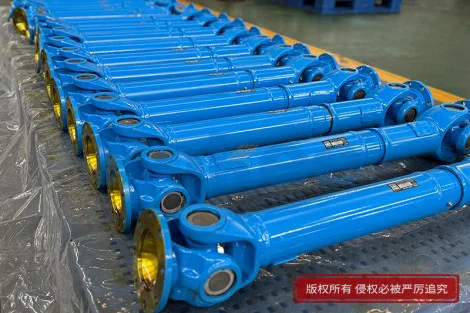
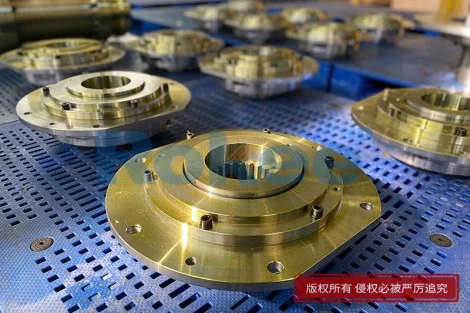
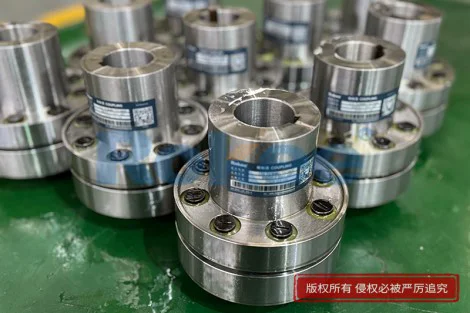
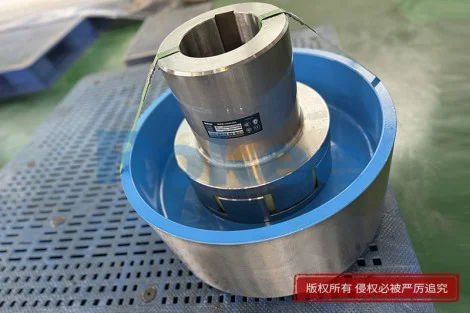
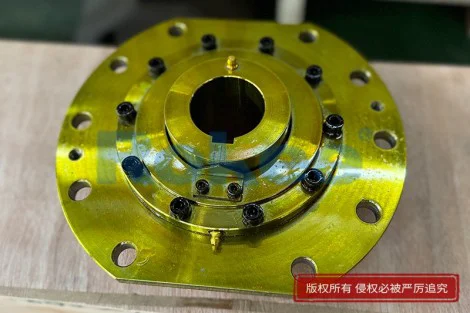
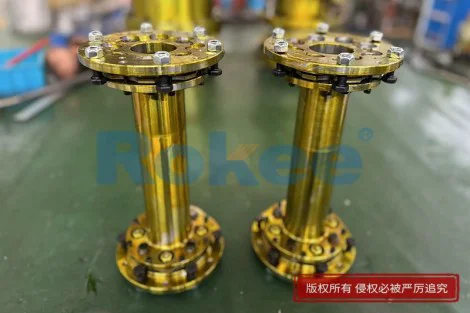
The basic structural composition of mining barrel coupling is compact and reasonable, with all core components designed for heavy-load and anti-wear requirements. The whole structure is mainly composed of two symmetric hub bodies, a connecting sleeve and multiple hardened steel barrel rolling elements. The hub bodies are installed on the driving shaft and driven shaft respectively, and the outer side of each hub is machined with uniformly distributed semicircular curved grooves. The inner wall of the connecting sleeve is also provided with matching curved groove structures. After the two hubs are butted, the curved grooves on the hubs and the sleeve form complete circular accommodating spaces, where the hardened steel barrels are placed stably. All contact parts are processed with high-precision machining technology to ensure the fitting clearance and contact accuracy between the barrels and the groove surfaces. This unique structural design realizes surface contact transmission between components, completely different from the linear contact of gear couplings and point contact of pin couplings. The large-area uniform contact mode can disperse the concentrated torque and pressure generated during equipment operation, effectively reducing the unit area stress of the transmission parts, and greatly improving the overall load-bearing capacity and impact resistance of the coupling. In addition, the exterior of the coupling is equipped with a closed protective structure, which can effectively isolate external impurities, avoid internal component abrasion and lubricant leakage, and maintain stable transmission performance for a long time in dusty and humid mining environments.
The working principle of barrel coupling in mining mechanical systems is based on flexible torque transmission and passive misalignment compensation. When the mining equipment starts to operate, the driving hub rotates synchronously with the power shaft, and the rotational torque is stably transmitted to the connecting sleeve through the tightly fitted barrel rolling elements, and then the connecting sleeve drives the driven hub and the connected equipment shaft to rotate synchronously, realizing efficient power transmission. In the whole transmission process, the barrel rolling elements can produce slight rolling and sliding displacement in the curved grooves, which endows the coupling with excellent adaptive adjustment capability. In actual mining operation, equipment installation errors, long-term mechanical vibration, metal fatigue and foundation settlement will inevitably cause different degrees of axial displacement, radial deviation and angular deflection between the two connected shafts. These misalignment problems will cause additional alternating stress on the transmission system, accelerate component wear, and even lead to shaft fracture and equipment shutdown in severe cases. The curved fit structure of barrel coupling can perfectly adapt to these deviations. The rolling elements can adjust the contact position in real time according to the shaft offset, automatically compensate for various misalignments generated during operation, eliminate additional mechanical stress, and ensure continuous and stable torque transmission without jamming or power loss.
The unique performance advantages of barrel coupling make it highly compatible with the full-cycle operation characteristics of mining equipment. First of all, its super heavy-load bearing capacity is the core advantage for mining application. The surface contact transmission structure increases the effective stress area by several times compared with traditional couplings, which can withstand long-term high-torque operation and frequent impact loads generated by equipment starting, braking and load mutation. In mining production, equipment often needs to start with full load and bear instantaneous impact force brought by material dumping and load fluctuation. Ordinary couplings are prone to local stress concentration, resulting in tooth surface wear, pin fracture and other failures, while barrel coupling can evenly disperse impact pressure through large-area contact, avoid local fatigue damage, and greatly extend the service life of transmission components. Secondly, the excellent vibration and shock absorption performance effectively optimizes the operating state of mining machinery. The rolling fit structure between barrels and grooves has a certain flexible buffering effect, which can absorb the vibration energy generated during equipment operation, reduce the vibration transmission between shafts, avoid resonance phenomenon of the transmission system, and reduce the wear of bearings, reducers and other matching components.
Strong environmental adaptability is another key reason why barrel coupling is widely used in mining scenarios. Mine tunnels and open-pit mining sites are filled with a large amount of mineral dust, gravel and humid gas, and some underground mining areas also have corrosive moist air. These harsh environmental factors will cause serious abrasion and corrosion to exposed mechanical transmission components. The closed integral structure of mining barrel coupling can effectively block the invasion of external dust, sediment and moisture. The internal high-hardness steel barrels and precision-machined groove surfaces are not easy to accumulate impurities, and the internal lubricating state can be kept stable for a long time. Compared with open transmission structures, it avoids the failure problems of transmission jitter and torque attenuation caused by dust abrasion and lubricant deterioration. At the same time, the overall structural rigidity of the coupling is high, and it will not produce deformation and failure under the action of long-term mechanical vibration and external impact, which ensures the continuous and reliable operation of equipment in uninterrupted mining production.
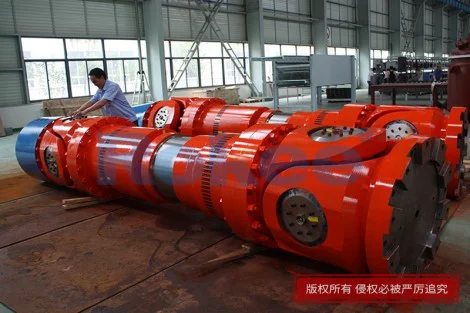
Barrel couplings are applied in almost all core heavy-duty mechanical equipment in the mining industry, covering underground mining, open-pit mining, mineral processing and transportation links. In mining hoisting equipment, barrel couplings are used to connect reducers and hoisting drums, undertaking the power transmission task of ore and personnel hoisting. The stable torque transmission and impact resistance can adapt to the frequent forward and reverse rotation and load fluctuation of hoisting equipment, ensuring the safety and stability of hoisting operation. In mining scraper conveyors and belt conveyors, the couplings connect driving motors and transmission reducers, adapting to the long-term continuous operation state of conveying equipment. The misalignment compensation function can offset the shaft deviation caused by long-distance operation and equipment vibration, avoiding frequent equipment failure and shutdown maintenance. In addition, barrel couplings are also widely matched with mining crushing equipment, grinding equipment and underground tunneling equipment. These devices have the characteristics of high operation intensity and severe working vibration, and the excellent comprehensive performance of barrel couplings can fully meet their long-term stable operation requirements.
In terms of operational stability and energy consumption control, barrel coupling also shows outstanding advantages in mining application. The high-precision matching structure ensures small fitting clearance and high transmission accuracy, which can realize almost lossless torque transmission and avoid power waste caused by transmission slipping and jitter. In large-scale mining production, the power loss of mechanical transmission system directly affects the overall production energy consumption and operation cost. The efficient transmission performance of barrel couplings can effectively improve the mechanical operation efficiency, reduce invalid energy consumption, and create better economic benefits for mining production. At the same time, the stable transmission state avoids the abnormal vibration and impact of the equipment, reduces the fatigue loss of the entire mechanical structure, and effectively extends the overall service life of mining equipment. For large mining enterprises with continuous and large-scale production, reducing equipment failure rate and extending maintenance cycle are crucial to improving production efficiency, and the high stability of barrel couplings just meets the core production needs of the mining industry.
The maintenance characteristics of barrel couplings are very suitable for the high-efficiency production mode of the mining industry. The overall structure is simple and compact, with few internal wearing parts, and all core components are made of high-strength and high-hardness materials, which are not easy to be damaged in daily operation. Different from complex coupling structures that require frequent disassembly, inspection and replacement of vulnerable parts, mining barrel couplings only need regular simple inspection of sealing performance and internal lubrication state in daily use. The closed protective structure can keep the internal lubricant clean for a long time, avoiding frequent oil replacement and cleaning work. When routine maintenance is required, the disassembly and assembly process is simple and efficient, without complex professional tools and tedious operation steps, which can greatly save equipment maintenance time and labor cost, and reduce the production downtime caused by equipment maintenance. In the harsh mining working environment where maintenance operation is inconvenient, the simple and durable maintenance advantage of barrel couplings greatly improves the operational convenience of mechanical equipment.
With the continuous upgrading of modern mining industry towards large-scale, intelligent and high-efficiency production, the performance requirements for supporting mechanical transmission components are constantly improving. Traditional coupling products have been unable to adapt to the high-intensity and long-cycle operation requirements of new mining equipment due to their low load-bearing capacity, poor compensation performance and short service life. As an optimized heavy-duty transmission component, barrel coupling perfectly fits the development trend of modern mining machinery by virtue of its superior structural design and comprehensive performance. Its strong adaptability to harsh working conditions, stable high-efficiency transmission capability and low maintenance cost make it an ideal matching product for modern mining mechanical transmission systems. In the future, with the continuous innovation of mechanical processing technology and material technology, the comprehensive performance of barrel couplings will be further optimized, with stronger wear resistance, corrosion resistance and fatigue resistance, which can adapt to more extreme mining working conditions and provide more reliable basic guarantee for the safe and efficient operation of mining equipment.
In conclusion, barrel coupling plays an irreplaceable role in the field of mining mechanical transmission. Its unique surface contact transmission structure, excellent misalignment compensation performance, super impact resistance and environmental adaptability solve many pain points of traditional coupling products in mining application, such as easy wear, frequent failure and poor stability. It provides stable power transmission support for various heavy-duty mining equipment, effectively reduces equipment failure rate and operation and maintenance cost, improves the overall operation efficiency and production safety of mining production lines. As a key basic component of mining machinery, barrel coupling will continue to exert its performance advantages in long-term mining production, and become an important guarantee for the stable operation and efficient development of the modern mining industry.