Barrel Shaped Coupling
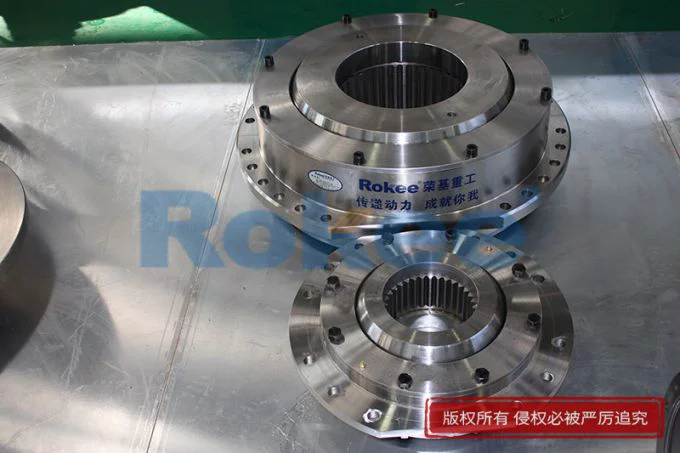
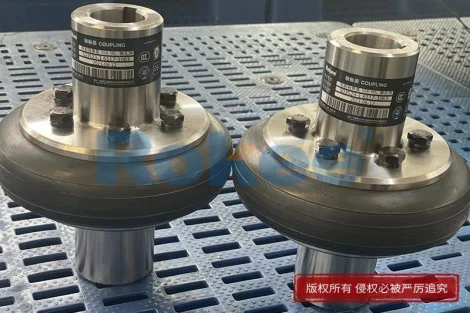
Barrel shaped coupling is a high-performance flexible transmission component widely adopted in modern mechanical power transmission systems, designed to address the common operational challenges of shaft misalignment, load fluctuation and mechanical vibration in rotating equipment. Distinguished from conventional rigid and ordinary flexible couplings, it integrates optimized curved profile structure and rolling contact transmission mode, achieving efficient torque transmission while retaining outstanding displacement compensation capability. The core design features cylindrical barrel rolling elements paired with matched semicircular tooth profiles, which enable uniform stress distribution during operation and eliminate local stress concentration that plagues traditional straight-tooth structures. This mechanical configuration allows the coupling to accommodate angular, radial and axial deviations between connected shafts generated by installation errors, thermal expansion and long-term operational wear. With robust load-bearing capacity, excellent wear resistance and stable dynamic performance, it serves as a critical connecting part for heavy-duty mechanical equipment, ensuring continuous and reliable power transmission in complex and harsh working conditions while reducing mechanical impact and extending the overall service life of transmission systems.
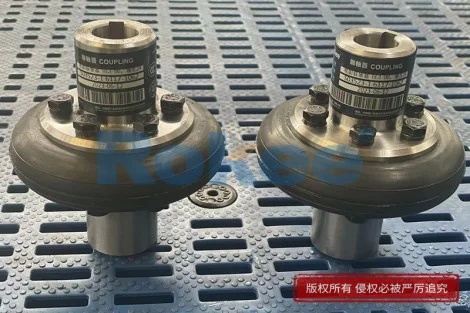
The overall structural composition of barrel coupling is sophisticated and functionally hierarchical, consisting of three core functional parts: outer sleeve with internal semicircular tooth grooves, inner hub with external curved tooth profiles, and high-strength steel barrel rolling elements sandwiched between them. All structural components are precisely machined to form a mutually matched meshing system, where the barrel rolling elements act as the key medium for torque transmission and displacement compensation. Different from traditional gear couplings that rely on sliding tooth meshing, this coupling adopts pure rolling contact between barrels and tooth surfaces, which fundamentally reduces friction resistance during power transmission. The outer sleeve and inner hub are forged into integrated structures with high structural rigidity, avoiding deformation or loose connection under high-load operation. The semicircular tooth grooves distributed evenly on the inner wall of the outer sleeve and the outer circumference of the inner hub provide accurate limiting and guiding for the barrel elements, ensuring each rolling element bears force evenly without eccentric load. In addition, the complete coupling is equipped with auxiliary sealing and positioning components, which can effectively isolate external dust, moisture and impurities, and maintain the stable relative position of internal parts during long-term operation, laying a solid structural foundation for durable and efficient transmission performance.
The working principle of barrel shaped coupling centers on flexible rolling transmission and multi-dimensional displacement compensation, realizing synchronous rotation and stable power output between two connected shafts. During equipment operation, the driving shaft drives the inner hub to rotate, and the torque is uniformly transmitted to the outer sleeve through the contact rolling of multiple barrel elements, thereby driving the driven shaft to operate synchronously. The unique curved contact surface between barrels and tooth profiles endows the coupling with flexible adaptability to various shaft misalignments. When the connected shafts produce angular deviation due to equipment assembly tolerance or operational vibration, the barrel elements can slightly roll and adjust their contact angles along the semicircular tooth grooves, automatically compensating for the angular offset without generating additional bending stress on the shaft body. For radial displacement caused by equipment vibration or component wear, the movable fit clearance between barrels and tooth structures allows appropriate radial floating to balance radial load deviation. Meanwhile, the structural gap reserved in the axial direction can adapt to axial displacement generated by thermal expansion and contraction of mechanical parts during long-time operation. This active adaptive adjustment mechanism ensures that the power transmission process remains smooth and continuous even when the shaft system has subtle deviations, avoiding transmission jitter, torque loss and component abrasion caused by misalignment.
Material selection and processing technology are core factors that determine the comprehensive performance and service life of barrel shaped coupling, with all key load-bearing components adopting high-quality alloy steel materials with superior mechanical properties. The barrel rolling elements, as the most critical force-transmitting parts, undergo integral quenching and tempering heat treatment, achieving high surface hardness, excellent compressive resistance and fatigue resistance. This processing method enables the barrels to withstand long-term cyclic load and instantaneous impact load without plastic deformation or surface wear, maintaining stable rolling contact accuracy for a long time. The outer sleeve and inner hub adopt high-strength forged alloy steel blanks, which eliminate the internal porosity and loose defects of cast materials, and have higher structural density and impact toughness. After precision turning, milling and tooth profile finishing, the matching accuracy of tooth grooves and curved surfaces is strictly controlled to ensure uniform contact and force bearing of all rolling elements. The surface of structural parts is also treated with anti-oxidation and anti-corrosion processes, which can resist erosion from humid, dusty and slightly corrosive working environments. The scientific material matching and precise processing technology make the coupling possess excellent comprehensive mechanical properties, adapting to long-term continuous operation under heavy load and complex working conditions.
Barrel shaped coupling exhibits remarkable performance advantages in load bearing, vibration damping and operational stability compared with traditional transmission couplings. Its rolling contact transmission mode greatly reduces friction loss in the power transmission process, realizing high-efficiency torque output with low energy consumption, and effectively improving the overall energy utilization rate of mechanical equipment. The uniform stress distribution characteristic avoids local overloading of components, enabling the coupling to bear large rated torque and instantaneous overload impact, which is especially suitable for frequent start-stop, load switching and heavy-duty operation scenarios. In terms of vibration reduction and buffering, the flexible rolling structure can absorb and weaken mechanical vibration and impact force generated during equipment operation, isolate vibration transmission between driving and driven shafts, and reduce the vibration noise of the entire transmission system. Moreover, the multi-dimensional displacement compensation capability effectively solves the transmission failure problem caused by shaft misalignment, greatly reducing the wear of shafts, bearings and other matching parts. During high-speed operation, the balanced structural design ensures small rotational inertia and stable dynamic balance, no eccentric vibration or abnormal noise, maintaining high-precision and high-stability operation of high-speed rotating equipment for a long time.
Thanks to its excellent comprehensive performance, barrel shaped coupling is widely applied in various industrial fields that require stable heavy-duty power transmission and high-precision operation. In heavy machinery industry, it serves as a key connecting component for hoisting equipment, winding machinery and material handling equipment, stably transmitting large torque and adapting to frequent load changes and impact working conditions. In manufacturing and processing equipment, it is applied to transmission systems of large reducers, conveyor equipment and mechanical transmission devices, ensuring continuous and stable power output in long-term continuous production. In energy and power equipment, the coupling matches with rotating machinery such as power transmission equipment and generator auxiliary equipment, maintaining high-efficiency and low-failure operation of power transmission systems. In engineering construction machinery, it adapts to the complex and variable working environments of construction equipment, resisting vibration, impact and environmental erosion to ensure reliable connection of transmission shafts. Its strong environmental adaptability and working condition tolerance make it applicable to both indoor stable production environments and outdoor harsh operation scenarios, becoming a universal and high-reliability transmission component in modern industrial mechanical systems.
Daily maintenance and fault prevention of barrel shaped coupling are simple and convenient, which is an important advantage that reduces equipment operation cost and improves production efficiency. Different from complex flexible couplings that require frequent replacement of elastic vulnerable parts, the core rolling and meshing components of barrel shaped coupling have high wear resistance and long service life, with no need for regular replacement of internal parts in the whole service cycle under normal working conditions. Daily maintenance only requires regular inspection of the sealing state to prevent lubricant leakage and external impurity invasion, and timely supplement of special lubricating grease to keep the rolling contact surface in a good lubrication state. Good lubrication can further reduce rolling friction, avoid dry wear of components, and maintain stable transmission accuracy. In the regular equipment overhaul process, it is only necessary to check the wear degree of barrel elements and tooth profiles, and confirm the tightness of fastening parts. The structural design without vulnerable elastic parts greatly reduces the frequency of equipment shutdown maintenance, improves the continuous operation rate of mechanical equipment, and effectively saves labor and maintenance costs for industrial production. Meanwhile, its simple disassembly and assembly structure facilitates quick inspection and replacement when individual parts are worn, ensuring efficient equipment maintenance.
With the continuous upgrading of modern mechanical equipment towards high speed, heavy load and high precision, the application value and development potential of barrel shaped coupling are increasingly prominent. Traditional rigid couplings are prone to stress damage and component failure under misalignment and impact load, while ordinary flexible couplings have limited load-bearing capacity and poor durability, unable to adapt to the high-standard operation requirements of modern machinery. Barrel shaped coupling perfectly makes up for the defects of traditional products, combining high rigidity load-bearing performance and flexible adaptive performance, achieving the dual goals of high-efficiency heavy-duty transmission and low-loss stable operation. Its optimized structural design, reliable material performance and convenient maintenance characteristics make it more adaptable to the development trend of modern industrial transmission systems. In the future, with the continuous innovation of material technology and processing technology, the comprehensive performance of barrel shaped coupling will be further improved, with stronger displacement compensation capability, higher load-bearing efficiency and longer service life, which will be more widely used in various high-end mechanical transmission fields and provide more stable and reliable technical support for the safe and efficient operation of industrial equipment.