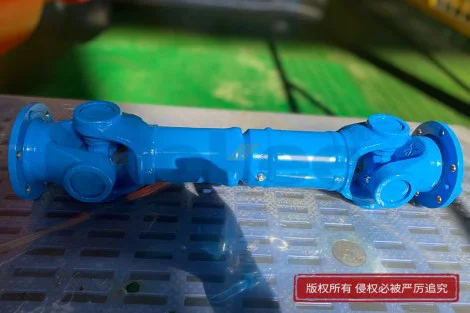
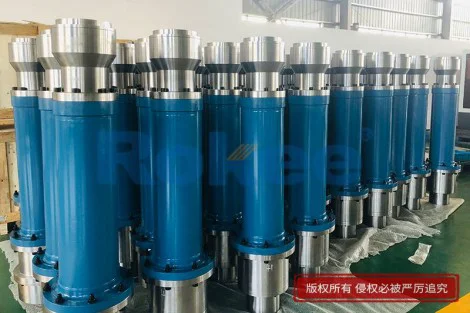
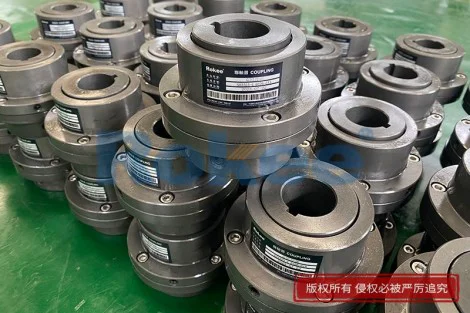
High Strength Barrel Coupling

In modern mechanical transmission and pipeline connection systems, the stability and durability of connecting components directly determine the overall operational efficiency and service life of entire equipment units. High strength barrel coupling stands out as a critical structural connector, widely adopted in heavy-duty mechanical equipment, fluid transmission pipelines, and industrial engineering systems that demand superior load-bearing capacity and connection reliability. Unlike ordinary connecting parts that only meet basic assembly needs, this type of coupling is engineered to address complex working conditions involving heavy loads, frequent vibration, environmental corrosion, and dynamic displacement, delivering stable connection performance and long-term operational safety in harsh industrial scenarios. Its unique barrel-shaped structural design and optimized mechanical performance make it an indispensable core component in medium and heavy industrial manufacturing fields.
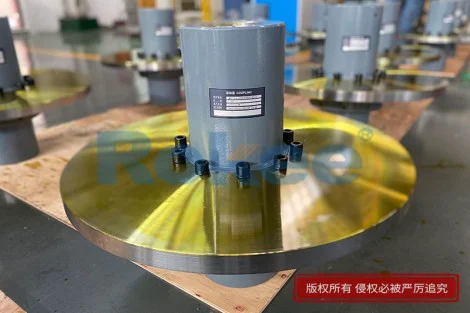
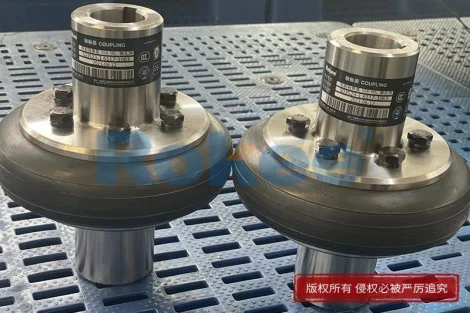
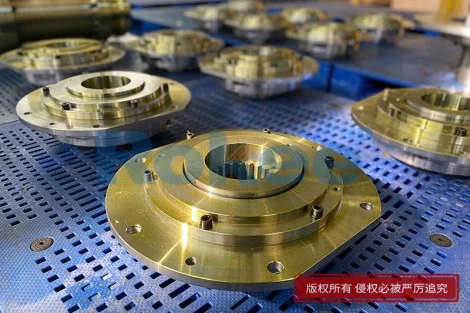
The structural design of high strength barrel coupling follows the principles of mechanical force balance and structural stability, with every detail optimized for high-load operation. The overall barrel-shaped outer shell adopts an integrated thick-wall forming process, which effectively avoids structural defects such as stress concentration and local deformation that are common in spliced structural parts. This integral structure enables the coupling to evenly disperse axial tension, radial pressure, and torsional force generated during equipment operation across the entire structural surface, rather than concentrating stress on individual connecting points. Inside the barrel shell, a precision matching structure is designed to fit the connecting ends of pipes or mechanical shafts, forming a tight wrapping and limiting state after assembly. Auxiliary fastening structures are arranged symmetrically on both sides of the barrel body to ensure uniform stress during locking, preventing eccentric stress caused by unilateral fastening that may lead to connection loosening or structural wear. Meanwhile, the built-in flexible sealing and buffering components work in tandem with the rigid barrel structure, balancing rigid load-bearing performance and flexible adaptive capacity to cope with minor displacement and vibration generated during equipment operation.
Material selection is the core foundation of the high strength performance of barrel couplings. To adapt to high-load and harsh working environments, the main body of the coupling is mostly made of high-density alloy materials with excellent mechanical properties. These materials feature high tensile strength, strong yield resistance, and good structural toughness, which can resist instantaneous impact loads and long-term cyclic loads without permanent structural deformation or fracture. Compared with ordinary carbon steel materials used in conventional couplings, the optimized alloy formula significantly improves the material’s fatigue resistance, allowing the coupling to maintain stable structural performance after millions of cyclic operations. The surface of the coupling undergoes special anti-corrosion and wear-resistant treatment, which enhances its adaptability to complex media such as humid air, industrial wastewater, and weak corrosive chemical fluids. The internal sealing components are made of high-elasticity and aging-resistant polymer materials, which can maintain stable sealing performance under long-term compression and temperature changes, effectively preventing medium leakage and external impurity infiltration at the connection position.
One of the most prominent advantages of high strength barrel coupling is its excellent comprehensive mechanical performance in complex working conditions. In terms of load-bearing capacity, the integral barrel structure achieves multi-directional force bearing, enabling it to withstand far greater axial tension and radial pressure than traditional flange connections and ordinary snap-in couplings. In mechanical transmission systems, it can stably transmit high torque without slipping or disconnection during equipment start-up, shutdown, and load switching. In fluid pipeline connection systems, its robust structural integrity resists pipeline displacement and deformation caused by internal medium pressure fluctuation, avoiding joint cracking and leakage problems that plague ordinary connectors. In terms of vibration resistance, the combination of rigid main body and flexible internal structure effectively absorbs and buffers mechanical vibration and pipeline jitter generated during equipment operation, reducing vibration transmission between connected components and lowering structural wear and operational noise. This vibration damping performance is particularly critical for continuous operating equipment, as it greatly reduces the probability of structural fatigue failure caused by long-term vibration.
The installation and assembly process of high strength barrel coupling is efficient and convenient, with strong on-site adaptability, which is another key reason for its wide industrial application. The standardized structural design allows the coupling to match conventional pipe and shaft specifications, eliminating the need for complex on-site cutting and shaping processes. The symmetric fastening structure enables operators to complete locking assembly through simple uniform fastening operations, with low requirements for assembly technology and operating experience. Unlike traditional connection methods that require precise alignment and complex calibration, the barrel coupling’s adaptive matching structure can tolerate minor dimensional deviations and assembly errors of connected parts, greatly improving on-site assembly efficiency. In addition, the bidirectional assembly design allows the coupling to adapt to forward and reverse connection requirements, with flexible installation directions that meet the spatial layout needs of different equipment and pipelines. The overall split assembly structure also facilitates later disassembly, maintenance, and component replacement, avoiding the tedious dismantling work of integrated connecting structures.
High strength barrel coupling exhibits outstanding environmental adaptability and can maintain stable working performance in a wide range of temperature and medium environments. In high-temperature working scenarios, the high-performance alloy main body will not undergo structural softening or strength attenuation, and the internal sealing components can maintain basic elasticity and sealing performance, ensuring the tightness and stability of the connection. In low-temperature environments, the material’s good low-temperature toughness prevents structural brittleness and cracking caused by temperature reduction, adapting to outdoor low-temperature operation requirements in northern regions and high-altitude industrial sites. For humid, dusty, and corrosive working environments, the surface protective layer can effectively isolate external harmful media, prevent structural oxidation, rust, and chemical corrosion, and extend the long-term service life of the coupling. Whether in open-air outdoor engineering equipment, closed industrial production workshops, or underground mining pipeline systems, the coupling can adapt to diverse environmental conditions and maintain consistent connection performance.
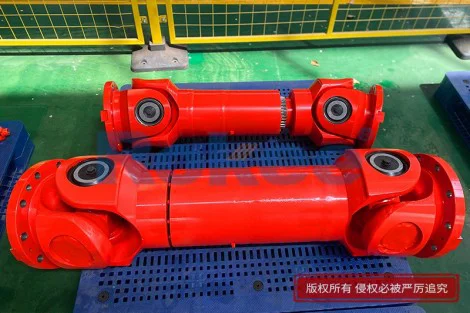
In practical industrial applications, high strength barrel coupling plays an irreplaceable role in multiple fields. In mechanical manufacturing and heavy equipment industry, it is used for shaft connection and power transmission of large transmission equipment, engineering machinery, and automated production equipment, ensuring stable power output during high-load operation of equipment and reducing equipment failure rates caused by connection problems. In fluid transmission engineering, it is applied to the connection of industrial water pipelines, chemical medium transmission pipelines, and oil and gas conveying pipelines, effectively solving the problems of pipeline joint loosening and medium leakage caused by pressure changes and mechanical vibration. In mining and metallurgical industries, where working conditions are harsh with heavy dust, strong vibration, and large load fluctuations, the coupling’s high strength and wear resistance ensure continuous and stable operation of pipeline and mechanical connection systems. In marine and offshore engineering, it adapts to humid and salt-spray corrosive environments, providing reliable connection guarantee for ship pipeline systems and offshore mechanical equipment.
Compared with traditional connecting components, high strength barrel coupling has obvious comprehensive performance advantages in long-term operational cost and maintenance efficiency. Traditional connection structures often suffer from loose fastening, sealing aging, and structural wear after long-term operation, requiring frequent inspection, fastening adjustment, and accessory replacement, which increases equipment maintenance time and operational costs. The high-strength structural design and high-quality material configuration of barrel couplings greatly reduce the frequency of daily maintenance. The stable structural performance avoids frequent connection failures, reduces equipment shutdown losses caused by connection faults, and improves the continuous operation efficiency of industrial production lines. In addition, the good structural compatibility of the coupling enables it to be compatible with most mainstream equipment and pipeline specifications, with strong versatility and low replacement cost in later use, bringing higher economic benefits to industrial production and equipment operation.
With the continuous upgrading of industrial manufacturing technology and the increasing demand for high-reliability industrial connections, the design and performance of high strength barrel coupling are also constantly optimized and improved. Modern production processes further improve the structural precision and mechanical uniformity of the coupling, eliminating tiny structural defects generated in the production process. The continuous innovation of material technology further enhances the coupling’s high temperature resistance, corrosion resistance, and fatigue resistance, expanding its adaptable working condition range. At the same time, the optimized structural design tends to be more lightweight and compact on the premise of ensuring high strength performance, reducing the overall structural volume and self-weight, making it more suitable for compact equipment layout and lightweight industrial equipment design trends. The iterative upgrading of this product always centers on actual industrial application needs, solving various connection pain points in complex working conditions and providing more reliable basic component support for the development of modern heavy industry, precision manufacturing, and fluid transmission engineering.
In conclusion, high strength barrel coupling integrates high load-bearing performance, excellent environmental adaptability, efficient assembly performance, and low maintenance cost, forming comprehensive advantages that ordinary connecting components cannot match. Its unique barrel-shaped mechanical structure achieves scientific force transmission and structural protection, and high-quality material configuration ensures long-term stable operation in harsh industrial environments. Whether in conventional industrial production links or special harsh working condition scenarios, it can provide stable, safe, and efficient connection solutions. As a key basic connecting component in the industrial field, it not only guarantees the operational stability of single equipment and single pipeline systems but also supports the efficient and safe operation of the entire industrial production system, occupying an important position in modern industrial engineering construction and equipment manufacturing, and having broad application prospects and continuous development value in the future industrial upgrading process.