Internal Spline Drum Coupling

In the complex ecosystem of industrial power transmission, couplings serve as the critical link between rotating shafts, ensuring the seamless transfer of torque while accommodating misalignments, absorbing shocks, and mitigating vibrations that could compromise machinery performance and longevity. Among the diverse array of coupling types available, the internal spline drum coupling stands out as a specialized and reliable solution, particularly suited for heavy-duty applications that demand high torque transmission, radial load bearing, and compact structural design. This component integrates the precision of spline connections with the robustness of drum-shaped structural elements, making it indispensable in industries ranging from lifting and material handling to manufacturing and heavy machinery. To fully understand the value and versatility of internal spline drum couplings, it is essential to explore their structural composition, key performance characteristics, various types, and wide-ranging applications, as well as the factors that contribute to their effectiveness in industrial settings.
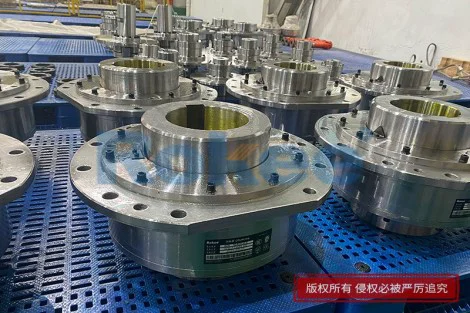
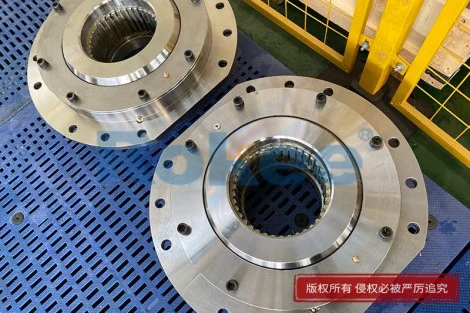
The structure of an internal spline drum coupling is engineered to balance strength, precision, and adaptability, with each component playing a vital role in ensuring efficient power transmission and operational stability. At its core, the coupling typically consists of several key parts that work in tandem to transfer torque, accommodate misalignments, and bear radial loads. The primary components include an outer gear shaft sleeve with drum-shaped teeth, a flanged outer sleeve with an internal gear ring, a bearing ring with an outer spherical surface, and sealing components such as end caps and sealing rings. The outer gear shaft sleeve, often connected to the output shaft of a reducer, features drum-shaped teeth that are precision-machined to ensure smooth engagement with the internal gear ring of the flanged outer sleeve, which is in turn attached to the drum or driven shaft. This meshing of drum-shaped teeth is a defining feature of the coupling, as it not only enables torque transmission but also provides the flexibility to compensate for minor shaft misalignments. The bearing ring, with its outer spherical surface, forms a contact pair with the inner bearing surface of the outer sleeve, creating an automatically adjustable spherical bearing that is responsible for bearing radial loads—a critical function in applications such as lifting equipment where the drum is subjected to significant radial forces from wire ropes or other load-bearing elements. Additionally, the sealing components prevent lubricating grease leakage and protect internal parts from dust, debris, and other contaminants, ensuring consistent performance and extending the coupling’s service life. Some designs also incorporate positioning wear indicators, lubrication oil holes, and vent holes to facilitate maintenance and monitoring of the coupling’s condition during operation.
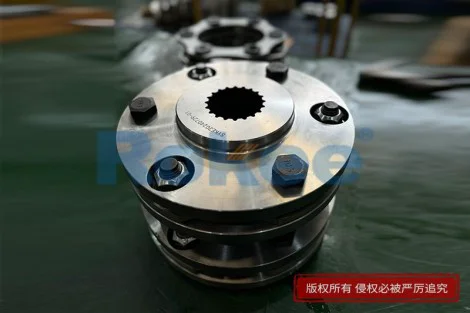
The internal spline connection, which gives the coupling its name, is a key structural element that enhances its torque transmission capabilities and precision. Unlike external spline connections, where splines are cut on the outer surface of a shaft, internal splines are machined on the inner surface of the outer sleeve, creating a secure and efficient interface with the external splines on the mating shaft or gear sleeve. This internal spline design allows for a larger contact area between the mating components, distributing torque more evenly and reducing stress concentrations that could lead to premature wear or failure. The splines themselves are typically available in two main configurations: involute splines and straight side splines. Involute splines feature curved, involute-shaped teeth that enable smooth engagement and disengagement, high torque transmission capacity, and reduced stress concentration, making them ideal for heavy-duty applications. Straight side splines, on the other hand, have straight-sided teeth and are better suited for applications that require high positional accuracy and moderate torque transmission. The choice of spline type depends on the specific requirements of the application, including torque levels, positional precision, and operational conditions.
The performance characteristics of internal spline drum couplings are directly tied to their structural design, making them well-suited for demanding industrial environments. One of the most notable performance attributes is their high torque transmission capacity, which is enabled by the combination of the drum-shaped gear meshing and internal spline connection. The large contact area between the drum-shaped teeth and the internal gear ring, along with the even torque distribution provided by the splines, allows the coupling to transmit significant amounts of torque without compromising structural integrity. This makes internal spline drum couplings particularly suitable for heavy-duty applications such as crane lifting mechanisms, where the coupling must transfer torque from the reducer to the drum while supporting the weight of heavy loads. Another key performance feature is their ability to bear radial loads, thanks to the spherical bearing formed by the bearing ring and the outer sleeve. This spherical bearing design not only supports radial loads but also allows for automatic alignment, compensating for minor radial and angular misalignments between the input and output shafts. The maximum angular displacement compensation can reach up to 3 degrees in some designs, ensuring smooth operation even when there are slight installation errors or shaft deflections during operation.
In addition to torque transmission and radial load bearing, internal spline drum couplings exhibit excellent stability and reliability. The compact structural design allows them to fit within limited spaces, making them suitable for applications where installation space is constrained, such as in the confined areas of crane hoists or industrial machinery. The precision machining of components ensures tight tolerances and smooth operation, reducing vibration and noise during use. This stability is further enhanced by the use of high-quality materials, which are selected based on the application’s operational requirements. Most internal spline drum couplings are fabricated from high-strength steel or alloy materials, which offer excellent durability, wear resistance, and resistance to fatigue. These materials are capable of withstanding the high stresses and repeated loads encountered in heavy-duty industrial applications, ensuring a long service life and minimal maintenance requirements. The inclusion of effective sealing systems also contributes to the coupling’s reliability by preventing lubricant leakage and protecting internal components from environmental contaminants, which can cause premature wear and failure.
Another important performance characteristic of internal spline drum couplings is their ability to accommodate axial, radial, and angular misalignments between the connected shafts. Axial misalignment can occur due to thermal expansion and contraction of shafts during operation, while radial and angular misalignments may result from installation errors or shaft deflection under load. The drum-shaped teeth design allows for axial movement of the outer gear shaft sleeve within the inner gear ring, accommodating axial misalignments without affecting torque transmission. The spherical bearing formed by the bearing ring and outer sleeve enables radial and angular misalignment compensation, ensuring that the coupling remains operational even when the shafts are not perfectly aligned. This misalignment compensation capability is crucial in industrial applications, as it reduces stress on the coupling and connected machinery, extending the service life of the entire transmission system. Additionally, internal spline drum couplings exhibit good shock absorption and vibration damping properties, which help to reduce the impact of sudden load changes and vibrations on the transmission system, further enhancing operational stability.
Internal spline drum couplings are available in several types, each designed to meet specific application requirements in terms of torque capacity, misalignment compensation, and structural configuration. The most common types include the WZL internal spline drum coupling, which is a spherical hinged coupling featuring a connecting flange with an inner spherical surface, a spherical semi-coupling sleeve with an outer spherical surface, and a special transmission key. This type of coupling is particularly well-suited for connecting the reducer output shaft of lifting mechanism with the wire rope drum, as it can withstand large torque and radial loads while providing up to 3 degrees of angular displacement compensation. Another type is the DC series internal spline drum coupling, which is designed specifically for crane applications and features a compact structure, high torque capacity, and reliable performance. The DC series coupling has a similar connection size to other drum coupling types but offers enhanced bearing capacity, making it suitable for heavy-duty crane operations.
Additionally, there are custom-designed internal spline drum couplings that are tailored to meet the unique requirements of specific applications. These custom couplings may feature modified spline configurations, different material selections, or specialized sealing systems to accommodate extreme operating conditions such as high temperatures, corrosive environments, or high-speed operation. For example, in applications where the coupling is exposed to corrosive substances, materials such as stainless steel or corrosion-resistant alloys may be used to ensure durability. In high-speed applications, precision balancing and modified bearing designs may be incorporated to reduce vibration and ensure smooth operation. The type of internal spline drum coupling selected for a particular application depends on a variety of factors, including torque requirements, radial load capacity, misalignment compensation needs, installation space, and operating environment.
The applications of internal spline drum couplings are diverse, spanning multiple industries where heavy-duty power transmission, radial load bearing, and compact design are essential. One of the primary applications is in lifting equipment and cranes, where the coupling is used to connect the output shaft of the reducer to the wire rope drum. In port terminals, construction sites, and warehouses, cranes and lifting mechanisms rely on internal spline drum couplings to transmit torque from the motor and reducer to the drum, enabling the lifting and movement of heavy loads. The coupling’s ability to bear radial loads and compensate for misalignments makes it ideal for this application, as it ensures stable and reliable operation even under the dynamic loads encountered during lifting and lowering operations. Additionally, the compact design of the coupling allows it to fit within the confined space of the crane hoist, making it a practical choice for lifting equipment manufacturers.
Another major application area for internal spline drum couplings is in material handling equipment, such as conveyors, elevators, and winches. In conveyor systems used in mining, manufacturing, and logistics, the coupling connects the reducer to the conveyor drum, transmitting torque to drive the conveyor belt. The radial load bearing capacity of the coupling is particularly important in this application, as the conveyor drum is subjected to significant radial forces from the belt and the materials being transported. Internal spline drum couplings also find applications in heavy machinery used in the metallurgical and steel industries, where they are used to connect shafts in rolling mills, crushers, and other equipment that requires high torque transmission and resistance to harsh operating conditions. The high durability and wear resistance of the coupling make it suitable for these applications, where the machinery is subjected to heavy loads, high temperatures, and dusty environments.
In addition to lifting and material handling, internal spline drum couplings are used in a variety of other industrial applications, including marine equipment, construction machinery, and agricultural machinery. In marine applications, such as ship cranes and winches, the coupling must withstand corrosive saltwater environments and high loads, making the use of corrosion-resistant materials and effective sealing systems essential. In construction machinery, such as excavators and bulldozers, the coupling connects the hydraulic motor to the drum or other rotating components, enabling the transmission of torque for various operations. Agricultural machinery, such as harvesters and tractors, also uses internal spline drum couplings in their transmission systems, where they must withstand the harsh conditions of agricultural operations, including dust, dirt, and variable loads.
The versatility of internal spline drum couplings also extends to custom applications, where they are adapted to meet the specific needs of unique industrial processes. For example, in the renewable energy sector, internal spline drum couplings may be used in wind turbine gearboxes to connect the rotor shaft to the generator, transmitting torque while accommodating the misalignments that can occur due to wind loads. In the automotive industry, they may be used in heavy-duty trucks and buses to connect the transmission to the drive shaft, providing reliable torque transmission in demanding road conditions. The ability to customize the coupling’s design, material, and performance characteristics makes it a flexible solution for a wide range of industrial applications.
When selecting an internal spline drum coupling for a specific application, several factors must be considered to ensure optimal performance and longevity. The first factor is torque capacity, which must match or exceed the maximum torque generated by the prime mover and transmitted to the driven equipment. The radial load capacity is also a critical consideration, particularly in applications where the drum or driven shaft is subjected to significant radial forces. Misalignment compensation requirements should be evaluated to ensure that the coupling can accommodate the expected axial, radial, and angular misalignments between the connected shafts. Installation space is another important factor, as the compactness of the coupling may be essential in confined areas. The operating environment, including temperature, humidity, and exposure to contaminants, should also be taken into account when selecting materials and sealing systems. For example, in high-temperature applications, heat-resistant materials and lubricants may be required to prevent premature failure.
Maintenance is another key aspect of ensuring the long-term performance of internal spline drum couplings. Regular lubrication is essential to reduce friction between the meshing teeth and the spherical bearing, preventing wear and extending the service life of the coupling. The type of lubricant used should be selected based on the operating conditions, including temperature and load. Regular inspections should be conducted to check for signs of wear, such as tooth damage, bearing wear, or seal leakage. Wear indicators, where present, can provide valuable information about the condition of the coupling and when maintenance or replacement is necessary. Additionally, proper installation is crucial to ensure that the coupling is aligned correctly and that all components are securely fastened, as misalignment or loose connections can lead to premature wear and failure.
In conclusion, internal spline drum couplings are essential components in industrial power transmission systems, offering a unique combination of high torque transmission capacity, radial load bearing, misalignment compensation, and compact design. Their structural composition, which integrates internal spline connections with drum-shaped gear elements and spherical bearings, enables them to perform reliably in the most demanding industrial applications. The various types of internal spline drum couplings available, including standard and custom designs, make them suitable for a wide range of industries, from lifting and material handling to metallurgy, marine, and construction. By understanding the structure, performance characteristics, types, and applications of internal spline drum couplings, industrial operators and equipment manufacturers can select the right coupling for their specific needs, ensuring efficient, reliable, and long-lasting operation of their machinery. As industrial technology continues to advance, the design and performance of internal spline drum couplings are likely to evolve further, incorporating new materials and technologies to meet the growing demands of modern industrial applications.