Cardan Driveshaft Improves Transmission Precision and Stability of PUF Sandwich Panel Making Machinery
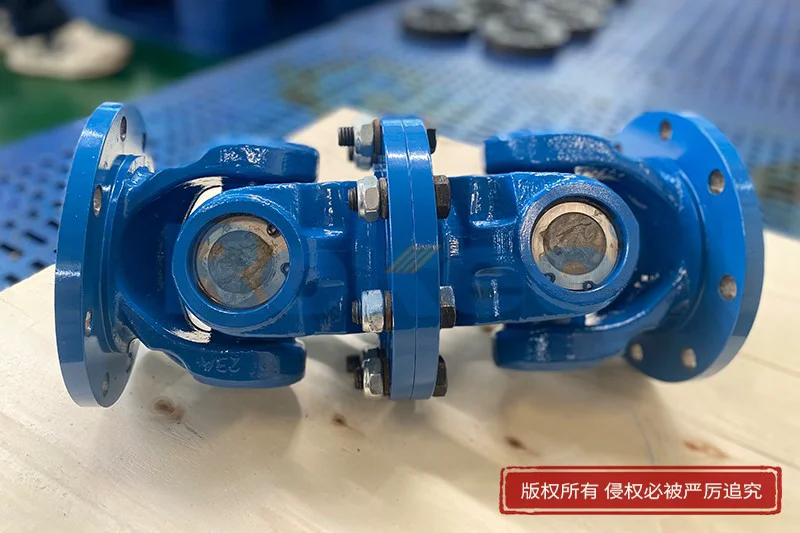
In the field of modern industrial manufacturing, the production of PUF (Polyurethane Foam) sandwich panels relies heavily on the stability and precision of specialized making machinery. These machines integrate multiple mechanical systems, including uncoiling, roll forming, foaming, lamination, and cutting, all of which require synchronized power transmission to ensure the quality of the final products. Any deviation in transmission precision or instability in power delivery can lead to defects such as uneven panel thickness, poor bonding between the core and facing materials, and irregular cutting edges, directly affecting production efficiency and product competitiveness. Among the numerous components that constitute the transmission system of PUF sandwich panel making machinery, the cardan driveshaft, also known as the universal joint driveshaft, stands out as a critical element that significantly enhances transmission precision and operational stability. Its unique structural design and excellent mechanical performance address the inherent challenges of power transmission in such complex machinery, providing a reliable solution for the continuous and high-quality production of PUF sandwich panels.
To understand the role of the cardan driveshaft in improving the transmission performance of PUF sandwich panel making machinery, it is first necessary to clarify the working characteristics of the machinery and the core challenges faced by its transmission system. A modern PUF sandwich panel making machine is a continuous, automated production system that integrates mechanical, electrical, hydraulic, and chemical reaction technologies. It requires the coordinated operation of multiple subsystems, each driven by an independent power source, and the power must be transmitted to various executive components accurately and stably to ensure the entire production line operates in synchronization. The transmission system of such machinery faces several key challenges. Firstly, due to the limitations of the production process and the overall structure of the equipment, the installation and layout of each subsystem are often not on the same axis, resulting in angular deviations between the driving shaft and the driven shaft. Secondly, during long-term continuous operation, the machinery generates vibration and thermal expansion, leading to changes in the relative position of the shafts, which requires the transmission component to have a certain compensation capacity. Thirdly, the production process of PUF sandwich panels demands stable and uniform power transmission; especially in the foaming and lamination links, even slight fluctuations in transmission speed or torque will affect the density of the PUF foam core and the bonding effect between the core and the facing materials, thereby reducing product quality. Fourthly, the machinery needs to adapt to different specifications of PUF sandwich panels, which involves adjusting the speed and torque of each subsystem, requiring the transmission component to have good flexibility and adaptability. These challenges place high demands on the performance of the transmission system, and the cardan driveshaft, with its unique structural advantages, perfectly addresses these issues.
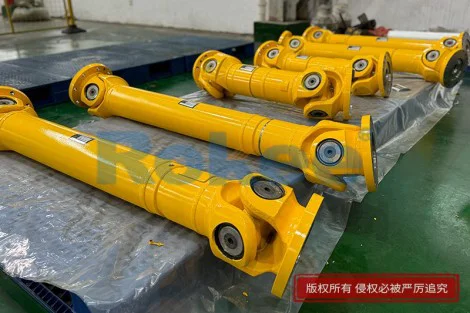
The cardan driveshaft is a mechanical component designed to transmit mechanical power, torque, and rotation between two rigid shafts that cannot be directly connected due to distance or the need for relative movement. Its core structure typically includes universal joints, a shaft body, and connection flanges or yokes, and it can be divided into different types such as cross cardan driveshafts, ball cage cardan driveshafts, and double cardan driveshafts according to structural differences. The cross cardan driveshaft, composed of two fork-shaped joints and a cross shaft with needle rollers or sliding bearings, has strong load-bearing capacity and is suitable for heavy-duty low-speed scenarios. The ball cage cardan driveshaft, with a spherical shell containing steel balls and a cage that transmits torque through the ball path, features smooth transmission and high-speed adaptability. The double cardan driveshaft, with an intermediate shaft adopting a modular and detachable structure, eliminates the speed fluctuations of single cardan driveshafts and is suitable for long-distance transmission. Regardless of the type, the core advantage of the cardan driveshaft lies in its ability to compensate for axial, radial, and angular deviations between the driving and driven shafts, allowing the two shafts to deflect within a certain angle range (usually 5° to 45°) while maintaining the continuity and stability of motion. This flexibility is crucial for PUF sandwich panel making machinery, as it effectively resolves the alignment issues caused by the equipment's structural layout and operational changes.
In PUF sandwich panel making machinery, the cardan driveshaft plays a key role in improving transmission precision by minimizing power loss and ensuring consistent torque delivery. Traditional rigid transmission components, such as solid driveshafts, require precise coaxial alignment between the driving and driven shafts; any slight misalignment will lead to increased friction, power loss, and even vibration, which affects the transmission precision. In contrast, the cardan driveshaft can transmit torque smoothly even when there is an angular deviation between the shafts, thanks to its universal joint structure. The articulated design of the universal joints allows the driveshaft to adapt to small changes in the relative position of the shafts caused by vibration, thermal expansion, or installation errors, ensuring that the torque is transmitted without significant fluctuations. This stable torque transmission is particularly important in the foaming process of PUF sandwich panels. The foaming process requires the uniform mixing of polyether polyol and isocyanate in a specific ratio, and the mixing speed and stability directly affect the density and uniformity of the foam core. The cardan driveshaft ensures that the power transmitted to the mixing unit is stable and consistent, avoiding uneven mixing caused by speed fluctuations, thus improving the precision of the foaming process and the quality of the foam core.
Moreover, the cardan driveshaft enhances the stability of PUF sandwich panel making machinery by reducing vibration and wear, thereby extending the service life of the equipment and reducing maintenance costs. During the operation of the machinery, the rotation of the shafts and the movement of the executive components will generate vibration, which not only affects the transmission precision but also accelerates the wear of mechanical components. The cardan driveshaft, with its flexible structure, can absorb and dampen part of the vibration generated during operation, reducing the impact of vibration on the entire transmission system and the machinery as a whole. The use of high-quality materials and precise manufacturing processes in the cardan driveshaft also contributes to its stability. High-strength alloy steel is often used for the shaft body, which undergoes strict heat treatment to improve its toughness and wear resistance. The universal joints are equipped with high-precision bearings, which reduce friction during rotation and ensure smooth operation. Additionally, the spline connection used in some cardan driveshafts can compensate for axial displacement over a large distance, further enhancing the adaptability and stability of the transmission system. In practical applications, machinery equipped with cardan driveshafts shows significantly less vibration during operation, and the wear of components such as bearings and gears is reduced, leading to fewer equipment failures and longer maintenance intervals.
The application of cardan driveshafts also improves the adaptability and flexibility of PUF sandwich panel making machinery, allowing it to meet the production needs of different specifications of panels. PUF sandwich panels are widely used in construction, refrigeration, and other fields, and different application scenarios require panels of different thicknesses, widths, and densities. This requires the machinery to adjust the speed and torque of each subsystem according to the production requirements. The cardan driveshaft, with its good flexibility, can adapt to the speed and torque adjustments of the machinery, ensuring that the transmission system remains stable and precise even when the operating parameters change. For example, when the machinery needs to produce thicker panels, the torque required by the lamination system increases, and the cardan driveshaft can transmit the increased torque stably without affecting the transmission precision. In addition, the cardan driveshaft can be customized according to the specific structure and requirements of the machinery, including length, torque capacity, flange type, and operating angle, ensuring perfect compatibility with the equipment and optimal transmission performance. This customization capability makes the cardan driveshaft suitable for various types of PUF sandwich panel making machinery, whether it is a small semi-automatic machine or a large fully automatic production line.
To fully exert the role of the cardan driveshaft in improving transmission precision and stability, proper installation, maintenance, and operation are essential. During installation, the alignment of the cardan driveshaft should be checked to ensure that the angular deviation between the driving and driven shafts is within the allowable range, which can prevent excessive stress on the universal joints and reduce wear. Regular lubrication of the universal joints and bearings is also necessary to reduce friction and ensure smooth operation; the choice of lubricating oil should be based on the operating conditions of the machinery, such as temperature and load. In addition, regular inspection of the cardan driveshaft for signs of wear, deformation, or damage, such as cracks on the shaft body, loose universal joints, or worn splines, can help detect potential problems in a timely manner and avoid equipment failures. Proper operation of the machinery, such as avoiding sudden starts and stops, can also reduce the impact on the cardan driveshaft and extend its service life.
In comparison with other transmission components, the cardan driveshaft has obvious advantages in terms of adaptability, precision, and stability, making it an indispensable core component in the transmission system of PUF sandwich panel making machinery. Traditional rigid driveshafts, although simple in structure and low in cost, cannot compensate for shaft misalignment, leading to poor transmission stability and low precision. Flexible couplings, another type of transmission component, have limited load-bearing capacity and are not suitable for heavy-duty operation scenarios of PUF sandwich panel making machinery. The cardan driveshaft, however, combines the advantages of flexibility and load-bearing capacity, being able to transmit large torques while compensating for shaft misalignment, thus ensuring high precision and stability in power transmission. Its wide range of angle compensation, high transmission efficiency, and strong durability make it the preferred transmission component for modern PUF sandwich panel making machinery.
With the continuous development of the PUF sandwich panel industry, the demand for high-quality, high-efficiency production machinery is increasing, and the performance requirements for transmission components are becoming more stringent. The cardan driveshaft, as a key component that improves transmission precision and stability, will play an increasingly important role in the upgrading and transformation of PUF sandwich panel making machinery. Future research and development will focus on optimizing the structure of the cardan driveshaft, improving its material performance, and enhancing its adaptability to more complex operating conditions. For example, the application of lightweight materials can reduce the weight of the driveshaft, reducing inertia and improving transmission efficiency; the development of maintenance-free universal joints can further reduce maintenance costs and improve the reliability of the equipment. These improvements will not only enhance the performance of the cardan driveshaft but also promote the overall development of the PUF sandwich panel manufacturing industry, enabling the production of higher-quality products to meet the diverse needs of the market.
In conclusion, the cardan driveshaft significantly improves the transmission precision and stability of PUF sandwich panel making machinery through its unique structural design and excellent mechanical performance. It effectively addresses the challenges of shaft misalignment, vibration, and torque fluctuation faced by the transmission system of such machinery, ensuring the stable and precise operation of each subsystem. The application of cardan driveshafts not only improves the quality of PUF sandwich panels but also enhances production efficiency, reduces equipment wear and maintenance costs, and increases the adaptability of the machinery to different production requirements. As the PUF sandwich panel industry continues to develop, the cardan driveshaft will remain a key component in the transmission system, contributing to the sustainable development of the industry. Its role in improving transmission performance cannot be overstated, making it an essential choice for modern PUF sandwich panel making machinery.