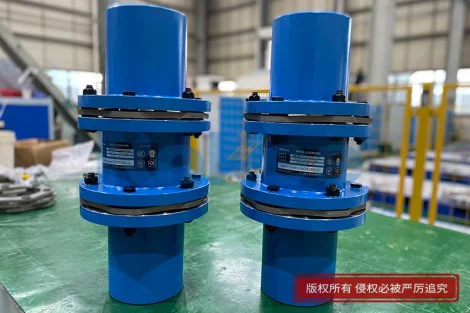
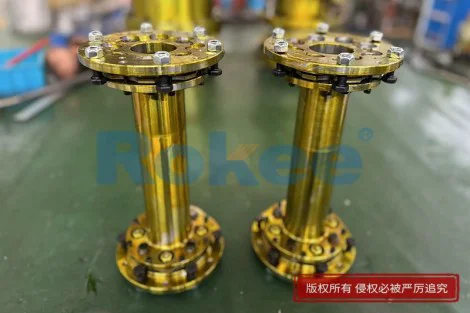
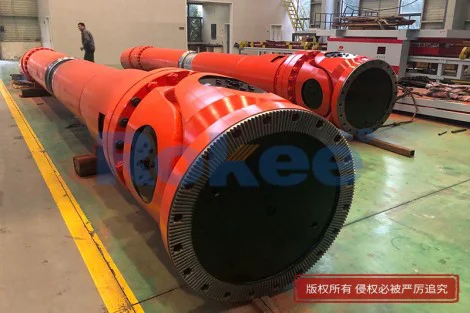
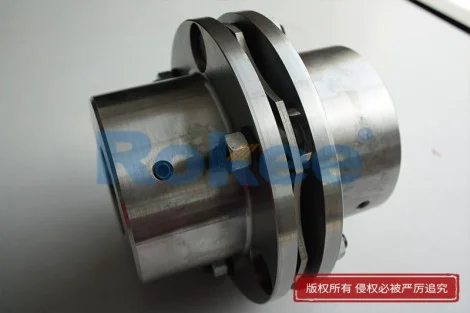
Universal Shaft for PU Sandwich Panel Line Corrosion and Heavy Load Resistance

In the modern construction and industrial manufacturing fields, polyurethane (PU) sandwich panels have become an indispensable core material due to their excellent thermal insulation, flame retardancy, light weight, and structural stability. These panels, composed of two outer facing materials and a rigid PU foam core, are widely used in external walls, roofs, cold storage facilities, prefabricated buildings, and various industrial workshops, driving the continuous upgrading and innovation of their production equipment. The PU sandwich panel production line is a complex integrated system that integrates mechanical, electrical, hydraulic, and chemical reaction technologies, requiring continuous and stable operation to ensure the consistency of product quality and production efficiency. Among the numerous components that constitute the transmission system of the production line, the universal shaft (also known as the cardan shaft) plays an irreplaceable role as a core power transmission component. Especially for production lines operating in harsh environments, the universal shaft must possess excellent corrosion resistance and heavy load resistance to cope with the challenges brought by long-term continuous operation, complex working conditions, and harsh environmental factors.
The working environment of the PU sandwich panel line imposes strict requirements on the performance of the universal shaft. Unlike general industrial transmission scenarios, the PU sandwich panel production process involves multiple links such as uncoiling of facing materials, roll forming, preheating, PU foaming, lamination, curing, and cutting. Each link requires precise and stable power transmission, and the universal shaft is responsible for connecting different subsystems that are not on the same axis, such as the uncoiling system, roll forming system, and double-belt lamination system, transmitting torque and motion stably while compensating for angular deviations and axial displacements between shafts. During the production process, the production line often operates continuously for 24 hours, which means the universal shaft must bear long-term continuous load, and the torque fluctuations caused by the start-up, shutdown, and speed adjustment of the equipment further increase the load pressure on the universal shaft. In addition, the working environment of the production line is often accompanied by corrosive factors: the PU foaming process may produce trace chemical gases and moisture, the cleaning of equipment will use water and cleaning agents, and in some outdoor or semi-outdoor production workshops, the universal shaft is also exposed to atmospheric humidity, dust, and even salt mist in coastal areas. These corrosive factors will gradually erode the surface and internal structure of the universal shaft, leading to surface rust, wear of key components, and even structural damage, which directly affects the normal operation of the production line and increases maintenance costs and production downtime.
To meet the special requirements of the PU sandwich panel production line for power transmission, the universal shaft designed for this field must take corrosion resistance and heavy load resistance as the core design principles, integrating structural optimization, material selection, and surface treatment technologies to ensure long-term stable operation in harsh working environments. The heavy load resistance of the universal shaft is mainly reflected in its ability to bear large torque and continuous load without deformation, fracture, or transmission failure. In the PU sandwich panel production line, the universal shaft needs to transmit torque to drive the operation of heavy-duty components such as the roll forming machine and double-belt conveyor. The roll forming machine, for example, needs to exert large pressure on the metal facing materials to form the required shape, which requires the universal shaft to provide stable and sufficient torque support. The double-belt conveyor, which is responsible for transporting the laminated sandwich panels during the curing process, also needs the universal shaft to bear the load of the panels and the conveyor belt itself, especially when the production line is running at full capacity, the load on the universal shaft will reach its peak. Therefore, the structural design of the universal shaft must be optimized to enhance its torque-bearing capacity and fatigue resistance.
The structural design of the universal shaft for PU sandwich panel lines is based on the characteristics of heavy load transmission and angular compensation. The core structure of the universal shaft usually includes cross bearings, universal joint forks, spline connections, and a central shaft body. To improve heavy load resistance, the universal joint forks and central shaft body are designed with a thickened structure, and the key stress points are reinforced through finite element analysis (FEA) to avoid stress concentration. The cross bearing, as the core rotating component, is designed with a large-diameter structure and uses high-precision needle bearings to improve the load-bearing capacity and rotation flexibility. The spline connection, which is used to compensate for axial displacement, adopts a full-tooth engagement design to ensure uniform force transmission and avoid local wear caused by uneven load distribution. In addition, the dynamic balance of the universal shaft is strictly controlled during the manufacturing process. Through precision machining and dynamic balance testing, the vibration generated during high-speed operation is reduced, which not only improves the stability of power transmission but also reduces the additional load caused by vibration, thereby extending the service life of the universal shaft under heavy load conditions.
Material selection is another key factor determining the heavy load resistance and corrosion resistance of the universal shaft. For the central shaft body, universal joint forks, and other main load-bearing components, high-strength alloy steels are selected, such as 42CrMo alloy steel, which undergoes integral forging and quenching-tempering treatment to improve its tensile strength and hardness. The tensile strength of this type of alloy steel can reach more than 1250 MPa, which can effectively bear large torque and prevent deformation and fracture under heavy load. The cross bearing and needle bearings are made of high-quality bearing steel such as GCr15SiMn, which is subjected to carburizing and quenching treatment, making the surface hardness reach HRC 60-64, ensuring excellent wear resistance and service life under long-term rotation and heavy load. For the spline connection part, anti-wear materials are used, and the surface is subjected to special treatment to reduce friction and wear during engagement, ensuring stable transmission under heavy load conditions.
Corrosion resistance is equally important for the universal shaft in the PU sandwich panel production line, as corrosive factors in the working environment can significantly reduce the service life of the component and affect the stability of the production line. To enhance corrosion resistance, a combination of surface treatment and structural sealing is adopted. The surface of the universal shaft is first subjected to rust removal and derusting treatment, and then a multi-layer anti-corrosion coating is applied. The coating material is selected according to the specific corrosive environment of the production line, such as epoxy resin coating or polyurethane coating, which has excellent adhesion, water resistance, and chemical corrosion resistance, and can effectively isolate the contact between the metal matrix and corrosive media such as moisture, chemical gases, and cleaning agents. In addition, the surface of some key components, such as the cross bearing and spline connection, is subjected to nitriding treatment, which forms a dense nitride layer on the surface, further improving corrosion resistance and wear resistance. The sealing structure of the universal shaft is also optimized to prevent dust, moisture, and corrosive media from entering the internal components. The dust cover and sealing ring used are made of high-temperature and corrosion-resistant materials, with a double-sealing design to ensure that the internal components of the universal shaft are in a clean and dry environment, avoiding corrosion and wear caused by the entry of external impurities.
In addition to structural design and material selection, the manufacturing process of the universal shaft also directly affects its corrosion resistance and heavy load resistance. The production of the universal shaft adopts advanced precision machining equipment and processes, such as CNC machining, laser cutting, and precision grinding, to ensure the dimensional accuracy and surface quality of each component. The dimensional accuracy of the universal joint forks, cross bearings, and spline connections is strictly controlled to ensure the fit accuracy between components, avoid uneven force caused by dimensional deviations, and improve the load-bearing capacity and transmission stability. During the assembly process, strict quality inspection is carried out to ensure that each component is installed correctly, and the clearance between components is adjusted to the optimal range to reduce friction and wear during operation. After assembly, the universal shaft undergoes strict performance testing, including torque testing, corrosion resistance testing, and dynamic balance testing, to ensure that it meets the requirements of heavy load transmission and corrosion resistance in the PU sandwich panel production line.
The application of the corrosion-resistant and heavy-load-resistant universal shaft in the PU sandwich panel production line has brought significant practical value to enterprises. Firstly, it ensures the continuous and stable operation of the production line. The excellent heavy load resistance enables the universal shaft to bear long-term continuous load and torque fluctuations, avoiding production downtime caused by component damage. The strong corrosion resistance reduces the impact of corrosive factors on the universal shaft, extends its service life, reduces the frequency of component replacement, and lowers maintenance costs. Secondly, it improves the quality of PU sandwich panels. The stable power transmission of the universal shaft ensures the synchronization and stability of each link of the production line, such as the uniformity of roll forming, the stability of foaming and lamination, and the accuracy of cutting, which directly improves the dimensional accuracy and structural stability of the finished PU sandwich panels. Thirdly, it enhances the adaptability of the production line. The universal shaft can adapt to different working environments, whether it is a high-humidity workshop, a production line with chemical corrosion factors, or an outdoor production site, it can maintain excellent performance, providing a reliable guarantee for the diversification of production scenarios.
In the actual operation of the PU sandwich panel production line, the maintenance of the universal shaft is also an important link to ensure its long-term corrosion resistance and heavy load resistance. Regular maintenance can timely discover potential problems and avoid component damage caused by neglect. The maintenance work mainly includes regular lubrication, surface cleaning, and inspection of key components. For the cross bearing and spline connection part, special high-temperature and anti-corrosion lubricating grease, such as molybdenum disulfide grease, should be used for regular lubrication. The lubrication cycle should be shortened according to the working environment: under general working conditions, lubrication can be carried out every 3-6 months; under heavy load, high humidity, or corrosive environments, the lubrication cycle should be shortened to 1-3 months to ensure that the rotating components are in a good lubricating state, reducing friction and wear. The surface of the universal shaft should be cleaned regularly to remove attached dust, grease, and corrosive substances, avoiding the accumulation of corrosive media on the surface and causing local corrosion. For the anti-corrosion coating on the surface, if peeling or damage is found, it should be repaired in time to maintain the integrity of the coating. In addition, regular inspection of the universal shaft's key components, such as the cross bearing, universal joint forks, and sealing ring, should be carried out to check for wear, rust, or damage. If problems are found, they should be replaced or repaired in time to avoid further damage to the universal shaft and affect the operation of the production line.
With the continuous development of the PU sandwich panel industry, the production line is developing towards higher automation, higher efficiency, and more complex working environments, which puts forward higher requirements for the performance of the universal shaft. In the future, the design and manufacturing of universal shafts for PU sandwich panel lines will pay more attention to the integration of corrosion resistance and heavy load resistance, and continuously optimize the structural design and material selection. For example, the application of new corrosion-resistant materials and surface treatment technologies will further improve the corrosion resistance of the universal shaft, making it adaptable to more harsh corrosive environments; the optimization of structural design through advanced simulation technology will further improve the torque-bearing capacity and fatigue resistance, meeting the needs of high-efficiency and heavy-load production lines. At the same time, the intelligence of the universal shaft will also become a development trend. By installing sensors and monitoring equipment, real-time monitoring of the operating status, load, and corrosion of the universal shaft can be realized, providing data support for predictive maintenance, reducing maintenance costs, and ensuring the long-term stable operation of the production line.
In conclusion, the universal shaft with corrosion resistance and heavy load resistance is an indispensable core component in the PU sandwich panel production line. Its performance directly affects the continuous operation, production efficiency, and product quality of the production line. Through scientific structural design, reasonable material selection, advanced manufacturing processes, and standardized maintenance, the universal shaft can effectively cope with the challenges of heavy load transmission and corrosive environments in the production line, providing a reliable power transmission guarantee for the development of the PU sandwich panel industry. As the demand for PU sandwich panels continues to grow and the production technology continues to upgrade, the role of corrosion-resistant and heavy-load-resistant universal shafts will become more prominent, promoting the sustainable development of the entire industry.