Pin Coupling For Motor

Pin couplings serve as essential mechanical transmission components specifically designed for motor shaft connection, undertaking the core task of transmitting torque while buffering and compensating for various operational deviations in motor drive systems. As a flexible coupling solution with a simple and practical structural design, it mainly relies on cylindrical pins and matching elastic buffer components to connect two coupling hubs fixed on the motor shaft and load shaft respectively. Unlike rigid couplings that lack deformation tolerance, pin couplings can effectively absorb axial, angular and parallel misalignments generated during motor operation, avoiding rigid friction and stress concentration between shafts. This type of coupling features compact structure, convenient installation and replacement, stable torque transmission and excellent vibration damping performance, making it widely applicable in various medium and low-speed motor drive equipment. It effectively reduces motor operation noise, delays mechanical component wear, and improves the overall operational stability and service life of the motor transmission system, becoming a reliable basic component in industrial power transmission fields.
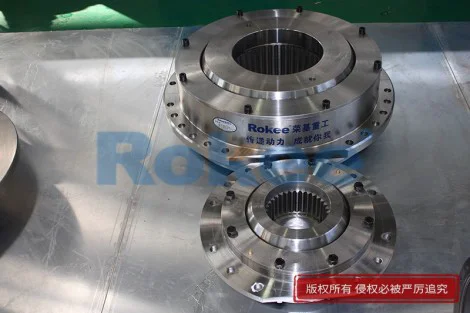
The basic structural composition of motor pin couplings is simple and modular, mainly including two symmetrical coupling hubs, high-strength transmission pins and elastic buffer sleeves, with no redundant auxiliary structures that may increase operational failure risks. The two hubs are separately fixed on the motor output shaft and the driven equipment shaft, forming two independent connecting ends of the transmission system. The cylindrical pins are uniformly distributed on the matching surfaces of the two hubs, serving as the core force-bearing parts for torque transmission. Elastic sleeves made of high-toughness polymer materials are sleeved on the outer layer of the pins, which are the key to realizing the flexible buffering function of the coupling. In the assembly state, the pins penetrate the reserved holes of the two hubs, and the elastic sleeves fill the gap between pins and hub holes, ensuring close contact between components. This structural design abandons the complex tooth-shaped or diaphragm structure of other flexible couplings, greatly reducing the number of parts. The simplified structure not only lowers the overall weight of the coupling but also avoids transmission jitter caused by component matching errors, enabling the coupling to maintain stable working conditions in long-term continuous motor operation and adapt to various conventional motor installation environments.
The working principle of pin couplings for motor operation centers on flexible torque transmission and misalignment compensation, realizing efficient and stable power delivery through the coordinated deformation of pins and elastic sleeves. When the motor starts and runs, the output torque drives the active hub to rotate, and the rotational force is transmitted to the driven hub through the compression and shear action of the pins, thereby driving the load equipment to operate synchronously. During this process, the elastic sleeves between the pins and hubs will produce mild elastic deformation according to the operating state. When tiny misalignments such as axial deviation, angular deflection and parallel offset occur between the motor shaft and the load shaft due to installation errors or equipment vibration, the elastic deformation of the sleeves can effectively absorb and offset these deviations. This flexible compensation mode avoids rigid collision and friction between metal parts of the two shafts, eliminates instantaneous stress impact during motor start-up and variable-speed operation, and ensures uniform and stable torque transmission. Meanwhile, the metal pins maintain sufficient structural rigidity, ensuring no torque loss or slipping during normal operation, which balances the two core performance requirements of flexible buffering and efficient transmission of motor drive systems.
Pin couplings have prominent performance advantages in motor matching applications, making them superior to many traditional coupling types in medium and low-power transmission scenarios. First of all, their excellent vibration and shock absorption performance can effectively filter the torsional vibration generated by motor start-stop, load mutation and unstable operation, reduce the vibration conduction between the motor and the load device, and protect the motor bearing and shaft components from fatigue damage caused by long-term vibration impact. Secondly, the coupling has strong misalignment tolerance, which can adapt to the tiny shaft displacement caused by equipment aging, foundation settlement and thermal expansion and contraction during motor operation, avoiding additional mechanical load on the motor shaft. In addition, the pin coupling has extremely low operational resistance and stable transmission efficiency, with almost no power loss in continuous operation, which helps improve the overall energy utilization rate of the motor system. Its durable structural design enables long-term stable operation in conventional industrial environments, and the wearing parts are single and easy to replace, effectively reducing the operational failure rate of motor transmission equipment.
In actual industrial scenarios, pin couplings are widely matched with various types of ordinary motors and geared motors, covering most medium and low-speed mechanical transmission equipment. They are commonly applied in supporting transmission systems of conveying equipment, ventilation fans, water pump equipment, light-duty processing machinery and other conventional industrial equipment driven by motors. For small and medium-sized motor devices with frequent start-stop and variable-load operation, pin couplings show particularly good adaptability, as their flexible buffering characteristics can well cope with the instantaneous torque change of the motor. In addition, in mechanical equipment requiring low noise and stable operation, the vibration reduction advantage of pin couplings can effectively reduce the operating noise of the motor transmission part and improve the on-site operating environment. Different from special couplings suitable for high-speed and high-precision equipment, pin couplings focus on practical stability and cost performance in conventional scenarios, perfectly matching the operational characteristics of most industrial motors and meeting the daily stable operation needs of mainstream motor drive systems.
Material selection directly determines the service performance and service life of motor pin couplings, and each component has targeted material matching standards to adapt to motor operating conditions. The coupling hubs are mostly made of high-strength cast iron or alloy steel, which have good rigidity, wear resistance and pressure resistance, can bear long-term torque impact and mechanical friction, and will not deform or damage under conventional motor load conditions. The transmission pins are made of high-tensile alloy steel after overall quenching and tempering treatment, with excellent shear resistance and fatigue resistance, ensuring that they will not break or deform during long-term torque transmission. The elastic buffer sleeves are usually made of high-quality rubber or polyurethane materials, which have good elasticity, aging resistance and oil resistance, can maintain stable elastic deformation in variable temperature and continuous operating environments, and are not easy to harden, crack or fail. The scientific material matching enables the pin coupling to maintain stable mechanical properties in long-term motor operation, adapt to conventional industrial temperature changes and slight dust and oil pollution environments, and ensure the reliability of motor power transmission.
Standardized installation and scientific daily maintenance are key prerequisites to ensure the long-term stable operation of motor pin couplings and maximize their service life. During installation, it is necessary to ensure that the coaxiality of the motor shaft and the load shaft is within the allowable compensation range of the coupling, avoid excessive installation deviation that exceeds the buffer capacity of the elastic sleeve, and prevent premature wear of components caused by forced operation. The tightening degree of the hub fixing parts should be moderate to ensure no relative sliding between the hub and the shaft during motor operation, while avoiding excessive clamping force that damages the shaft surface. In daily maintenance, regular visual inspection of the coupling is required to check for aging, cracking and deformation of the elastic sleeve, as well as loosening and wear of the transmission pins. Worn and failed buffer sleeves should be replaced in a timely manner to avoid loss of vibration damping and compensation functions. Regular cleaning of dust and oil stains on the coupling surface can prevent corrosive substances from affecting the elasticity and structural stability of components. Scientific maintenance can effectively avoid common faults such as transmission jitter, abnormal noise and torque attenuation of the coupling, and ensure the continuous and efficient operation of the motor transmission system.
With the continuous upgrading of industrial motor drive technology, the optimization and application of motor pin couplings are also developing towards higher stability and stronger adaptability. At present, the structural design of pin couplings is constantly optimized for complex working conditions, and improved buffer materials and structural forms are adopted to enhance the vibration damping effect and misalignment compensation range, adapting to the variable-load and frequent start-stop operation requirements of new energy-saving motors. The lightweight and integrated design of modern pin couplings further reduces the overall load of the motor shaft system, improves the dynamic response speed of motor transmission, and makes the power output more accurate and stable. In the future, with the progress of material technology and mechanical processing technology, pin couplings will break through the limitations of conventional working conditions, gradually adapt to more extreme temperature and load environments, and be more widely used in intelligent motor drive equipment. As a basic and reliable transmission component, it will continue to play an irreplaceable role in ensuring the stable operation and energy-saving optimization of industrial motor systems.