Nylon Pin Coupling

Nylon pin coupling is a widely adopted flexible transmission component designed to connect rotating shafts in mechanical systems, delivering stable torque transmission while integrating flexible buffering and displacement compensation functions. Distinguished from rigid coupling structures, it relies on high-performance nylon pins as the core elastic transmission medium, skillfully combining the structural rigidity of metal coupling hubs with the excellent elasticity and toughness of nylon materials. This unique structural design enables the component to effectively absorb mechanical vibration and impact loads generated during equipment operation, reduce transmission noise, and tolerate minor axial, radial, and angular misalignments between connected shafts. With a simple and compact overall structure, easy assembly and disassembly, and outstanding operational stability, it adapts to diverse medium and low-speed mechanical transmission scenarios. Free from complex auxiliary maintenance requirements, it boasts long service life and strong environmental adaptability, making it a preferred basic transmission part for general industrial machinery, civilian mechanical equipment, and various automated production facilities.
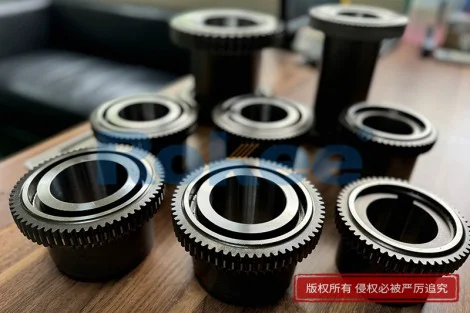
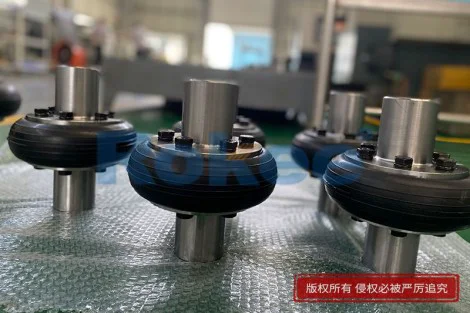
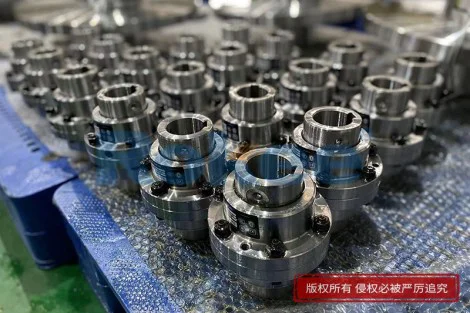
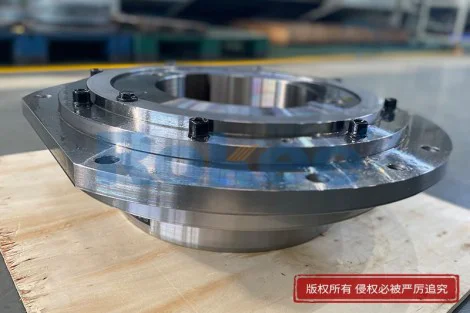
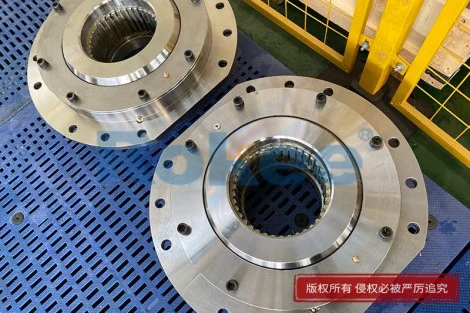
The basic structural composition of nylon pin coupling is concise and scientific, forming a complete transmission assembly with coordinated functional parts without redundant structures. The core components mainly include two symmetrical metal coupling hubs, multiple evenly distributed nylon pins, and auxiliary limit and fixing accessories. The two metal hubs are processed with precise mounting holes and pin holes, serving as the rigid connecting base for shaft installation and torque bearing. Nylon pins are arranged in the corresponding pin holes of the two hubs, acting as the key medium for torque transmission and flexible buffering. In the working state, the driving hub drives the driven hub to rotate synchronously through the nylon pins, realizing continuous power transmission between the two shafts. The symmetrical structural layout ensures balanced stress during operation, effectively avoiding unbalanced rotation and eccentric wear. Meanwhile, the detachable design of nylon pins allows for independent replacement of worn parts without disassembling the entire coupling or moving the connected mechanical equipment, which greatly simplifies daily maintenance operations. The overall compact structure also saves installation space, enabling flexible application in mechanical equipment with limited assembly dimensions and compact internal structures.
Material performance is the core advantage that supports the excellent working performance of nylon pin coupling, and the selection of high-quality modified nylon materials endows the coupling with unique comprehensive properties different from all-metal couplings. The specially optimized nylon material has excellent shear strength and tensile toughness, which can withstand long-term cyclic torque impact and friction wear in the transmission process, avoiding brittle fracture and rapid aging damage. Compared with traditional rubber elastic parts, nylon materials feature better wear resistance, lower compression deformation rate, and stronger fatigue resistance, maintaining stable elastic performance after long-term continuous operation. In addition, nylon materials have good damping and shock absorption characteristics, which can effectively consume and offset the instantaneous impact force generated by equipment start-stop, load mutation and operational vibration. The metal hubs matched with nylon pins adopt high-strength metal materials with good rigidity and structural stability, ensuring that the coupling can bear stable load transmission without structural deformation. The perfect combination of rigid metal framework and flexible nylon elastic elements balances structural stability and flexible buffering performance, laying a solid foundation for the reliable operation of the coupling in complex working conditions.
Nylon pin coupling possesses excellent displacement compensation capability, which solves the common operational problems caused by shaft misalignment in mechanical transmission systems. In actual mechanical operation, it is difficult to achieve absolute coaxiality between the driving shaft and the driven shaft due to installation errors, equipment vibration, thermal expansion and contraction of parts, and long-term operational wear. Tiny axial, radial and angular misalignments will inevitably occur between the two shafts, which easily cause additional load, vibration and wear of rigid transmission parts. The elastic deformation performance of nylon pins can well adapt to these minor displacement deviations, flexibly compensating for various misalignments generated during equipment operation. This compensation function avoids the concentration of transmission stress, reduces the additional friction and impact between shafts and mechanical parts, and effectively protects shafts, bearings and other core mechanical components from abnormal wear and damage. Moreover, this flexible compensation does not affect the efficiency of torque transmission, ensuring synchronous and stable rotation of the two shafts while eliminating the adverse effects of shaft misalignment on the entire transmission system.
Vibration damping and noise reduction are the prominent functional characteristics of nylon pin coupling, which greatly optimizes the operational environment and working stability of mechanical equipment. Mechanical transmission processes inevitably produce periodic vibration and friction noise due to load changes, part rotation and meshing transmission. All-metal couplings often transmit vibration and noise directly, leading to increased equipment operation noise and accelerated fatigue aging of mechanical structures. As a high-efficiency elastic damping medium, nylon pins can absorb most of the vibration energy generated in the transmission process, convert mechanical vibration energy into tiny elastic deformation energy and consume it, thus suppressing vibration transmission between shafts. At the same time, the flexible contact transmission mode of nylon pins avoids hard friction and rigid collision between metal parts, significantly reducing operational noise. In long-term continuous operation, this vibration damping and noise reduction effect can effectively reduce the operational fatigue of equipment, improve the smoothness of mechanical movement, and create a more stable and low-noise working state for various transmission equipment.
The maintenance-free and long-life advantages of nylon pin coupling make it have extremely high application economy and operational reliability in industrial scenarios. Benefiting from the excellent wear resistance and anti-aging properties of modified nylon materials, the nylon pins will not produce rapid wear, deformation or aging failure under normal working conditions, and can maintain stable working performance for a long time. The overall structure has no vulnerable precision parts or complex transmission structures, and there is no need for regular lubrication, oil replacement or fine calibration maintenance during daily operation, realizing true low-maintenance operation. When individual nylon pins are worn after long-term use, users can complete replacement quickly and conveniently with simple tools, without professional operation skills or long-term equipment shutdown. The metal hub has strong structural durability, not easy to deform or damage, and can be used repeatedly with replaced nylon pins. This low maintenance cost, simple maintenance process and long overall service life greatly reduce the daily operation and maintenance cost of mechanical equipment and improve the continuous operation efficiency of production and mechanical systems.
Nylon pin coupling has extremely wide application adaptability and can be applied to various medium and low-speed, medium-load mechanical transmission scenarios. It is widely used in conventional mechanical equipment such as fans, water pumps, transmission machines and textile machinery, providing stable power transmission and buffering protection for these general industrial equipment. In automated production equipment, it can adapt to frequent start-stop and variable-load working states, effectively mitigating the impact of load changes on the transmission system. It also performs well in light industrial processing, food machinery, packaging equipment and civilian mechanical facilities, where low noise and stable operation are required. Its moderate load-bearing capacity and excellent flexible buffering performance make it suitable for most conventional transmission working conditions, while its compact structure and convenient installation enable it to adapt to equipment with different installation spaces. Whether in continuous industrial production environments or intermittent civilian mechanical operation scenarios, it can maintain stable and reliable working performance, meeting the diversified power transmission needs of various mechanical systems.
With the continuous upgrading of mechanical manufacturing technology, the application value and performance advantages of nylon pin coupling are further highlighted in modern mechanical transmission systems. Different from high-precision rigid couplings and high-cost special elastic couplings, it achieves a perfect balance between transmission performance, practicality and applicability, and can meet the mainstream transmission needs of most general mechanical equipment. Its unique flexible transmission mode not only ensures the stability and efficiency of power transmission, but also provides effective overload protection for mechanical equipment. When the equipment is overloaded instantaneously, the nylon pins will produce appropriate elastic deformation to buffer the overload impact, avoiding instantaneous damage to shafts, motors and other key equipment caused by sudden load surge. In the future, with the continuous optimization of nylon material formulas and structural design, the comprehensive performance of nylon pin coupling will be further improved, with stronger load-bearing capacity, better high and low temperature resistance and longer service life, and it will continue to be an indispensable basic transmission component in the field of general mechanical transmission.