Barrel Gear Coupling Improves Production Efficiency Of PUR Sandwich Panel Production Line

In the modern manufacturing industry, the PUR sandwich panel production line plays an irreplaceable role in the construction, refrigeration, and transportation fields, thanks to the excellent thermal insulation, sound insulation, and structural strength of PUR sandwich panels. With the continuous expansion of market demand, manufacturers are constantly seeking ways to optimize production processes, reduce downtime, and improve overall production efficiency. Among the numerous components that make up the production line, the barrel gear coupling, as a key part of the power transmission system, has gradually attracted widespread attention due to its unique structural advantages and stable operational performance. Unlike ordinary couplings, the barrel gear coupling can effectively adapt to the complex working environment of the PUR sandwich panel production line, solve the common problems of power transmission in the production process, and thus provide strong support for improving production efficiency.
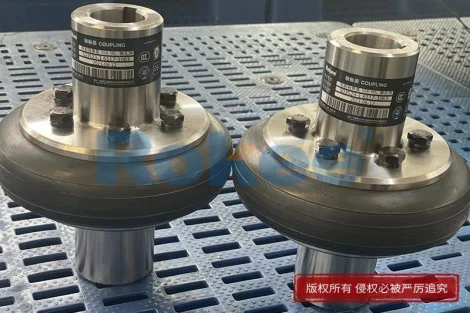
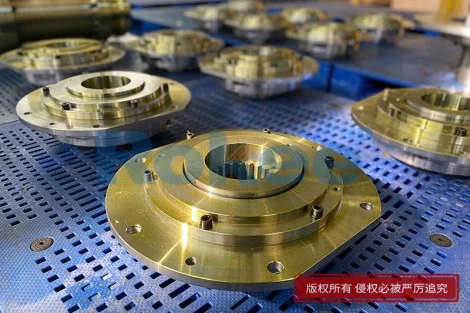
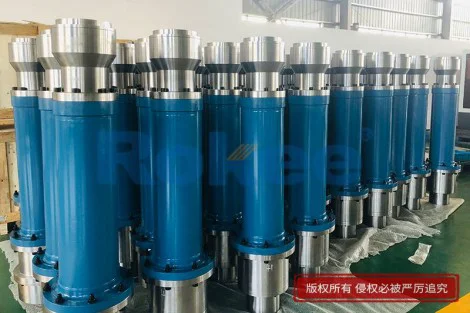
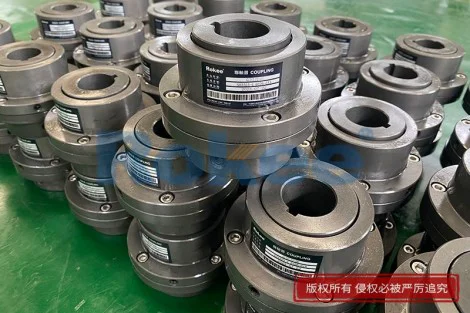
To understand how the barrel gear coupling improves the production efficiency of the PUR sandwich panel production line, it is first necessary to clarify the basic working principle and structural characteristics of the barrel gear coupling. A barrel gear coupling is a type of rigid-flexible coupling specifically designed to transmit high torque between two non-collinear rotating shafts. Different from rigid couplings that require precise shaft alignment, barrel gear couplings can accommodate angular, radial, and axial misalignments simultaneously, making them ideal for applications where shaft deviation is unavoidable due to thermal expansion, structural deformation, or installation limitations. The basic structure of a barrel gear coupling typically consists of four main components: two half-couplings (each connected to a shaft), an outer sleeve with internal teeth, and a sealing system. The core innovation lies in the unique design of the tooth profile: the tooth top and tooth root of the external teeth are both designed in an arc shape, forming a "barrel-shaped" profile. Through precision machining, the contact area between the teeth is maximized, and a reasonable gap is left to compensate for misalignment. In addition, barrel gear couplings are usually made of alloy steel and undergo carburizing and quenching treatment, which effectively improves their wear resistance and fatigue resistance, enabling them to maintain stable performance under long-term heavy-load operation.
The PUR sandwich panel production line is a complex system involving multiple links, including uncoiling and cutting, gluing and fitting, foaming and curing, cutting and trimming, and quality inspection and packaging. Each link is closely connected, and the stable operation of the power transmission system directly affects the smooth progress of the entire production line. In the traditional PUR sandwich panel production line, ordinary couplings are often used for power transmission. However, due to the harsh working environment of the production line, these ordinary couplings often face problems such as rapid wear, poor misalignment compensation, and high maintenance frequency, which seriously affect production efficiency. For example, during the foaming and curing process, the equipment needs to maintain a stable speed to ensure the uniformity of the PUR foam. If the coupling has poor misalignment compensation capacity, it will lead to unstable speed of the equipment, resulting in uneven foam density, unqualified product quality, and even the need to stop production for adjustment. In addition, the uncoiling and cutting system and the cutting and trimming system require precise power transmission to ensure the accuracy of the size of the panels. Once the coupling fails, it will cause errors in the size of the panels, increase the scrap rate, and bring unnecessary losses to the manufacturer.
The application of barrel gear couplings in the PUR sandwich panel production line effectively solves the above problems and achieves a significant improvement in production efficiency. Firstly, the excellent misalignment compensation capacity of barrel gear couplings ensures the stability of power transmission. In the production process of PUR sandwich panels, due to factors such as mechanical operation vibration, thermal expansion of equipment, and installation errors, the rotating shafts of each equipment are prone to angular, radial, and axial misalignments. The barrel gear coupling can accommodate these misalignments within a certain range, avoiding the occurrence of power transmission interruption or unstable operation caused by misalignment. This stability is particularly important for the foaming and curing link. The PUR foam needs to be mixed and foamed at a stable speed, and the temperature and pressure during the curing process also need to be strictly controlled. The stable power transmission provided by the barrel gear coupling ensures that the foaming machine and curing equipment operate at a constant speed, making the foam density uniform and the bonding between the foam and the surface layer more firm, thus reducing the scrap rate of products and improving production efficiency. At the same time, in the uncoiling and cutting link, the precise power transmission of the barrel gear coupling ensures that the cutting knife operates at a stable speed, improving the cutting accuracy of the surface layer (such as color steel plates) and reducing the error of the plate size, which lays a good foundation for the subsequent processing links.
Secondly, the high wear resistance and long service life of barrel gear couplings reduce the frequency of equipment maintenance and downtime. The PUR sandwich panel production line usually operates continuously for a long time, and the coupling, as a key component of power transmission, bears a large torque and is in a state of high-speed operation for a long time, so it is prone to wear and tear. Ordinary couplings have poor wear resistance, and need to be regularly disassembled and replaced, which not only increases the labor intensity of maintenance personnel but also leads to long-term production downtime, affecting production progress. The barrel gear coupling adopts high-strength alloy steel materials and advanced heat treatment technology, which significantly improves its wear resistance and fatigue resistance. At the same time, the "rolling-slipping composite motion" between the pin and the bushing of the barrel gear coupling reduces the friction coefficient and frictional heat, further slowing down the material fatigue and extending the service life of the coupling. Compared with ordinary couplings, the service life of barrel gear couplings can be extended by 2 to 3 times under the same working conditions, which greatly reduces the frequency of maintenance and replacement. In addition, the sealing system of the barrel gear coupling can effectively prevent dust, oil, and other pollutants from entering the coupling, avoiding wear caused by pollution and further reducing maintenance costs and downtime. The reduction of downtime means that the effective production time of the production line is increased, and the production efficiency is naturally improved.
Thirdly, the high torque transmission capacity of barrel gear couplings adapts to the heavy-load working requirements of the PUR sandwich panel production line. The PUR sandwich panel production line involves a variety of heavy-load equipment, such as uncoiling machines, foaming machines, and cutting machines. These equipment need to transmit large torque during operation to ensure normal operation. The barrel gear coupling has a large torque transmission range, which can meet the power transmission needs of various heavy-load equipment in the production line. Its curved contact structure makes the load distributed over a larger area, significantly reducing the stress per unit area, thus improving the load-bearing capacity. Compared with traditional straight pin couplings, the load-bearing capacity of barrel gear couplings can be increased by 2 to 5 times depending on the diameter and curvature, which enables the equipment to operate stably under heavy-load conditions and avoids power transmission failure caused by insufficient torque. For example, in the uncoiling process of large rolls of color steel plates, the uncoiling machine needs to output a large torque to pull the steel plates. The barrel gear coupling can stably transmit the torque from the motor to the uncoiling roller, ensuring the smooth uncoiling of the steel plates and avoiding the situation of steel plate jamming caused by insufficient torque, which effectively improves the production efficiency of the uncoiling link.
In addition to the above advantages, the barrel gear coupling also has the characteristics of low noise and stable operation, which creates a good working environment for the production line and further improves production efficiency. The meshing of the teeth of the barrel gear coupling is smooth, and the impact during operation is small, so the noise generated is low, generally below 75dB, which avoids the impact of noise on the work of employees and reduces the fatigue of employees. At the same time, the stable operation of the coupling also reduces the vibration of the equipment, which not only protects the other components of the equipment but also ensures the stability of the production process, reducing the occurrence of product quality problems caused by equipment vibration. For example, in the cutting and trimming link, the vibration of the equipment will cause the cutting knife to deviate, resulting in uneven trimming of the panels. The stable operation of the barrel gear coupling reduces the vibration of the cutting equipment, ensuring the flatness of the panel edges and improving the quality of the products.
Proper installation and regular maintenance are critical to ensuring the optimal performance and long service life of barrel gear couplings in the PUR sandwich panel production line, and further exerting their role in improving production efficiency. Before installation, it is essential to inspect the coupling components (half-couplings, outer sleeve, seals, bolts) for any damage, such as cracks, corrosion, or tooth wear. The tooth surfaces should be smooth and free of burrs or debris. It is also important to check the dimensions of the shaft holes and keyways of the half-couplings to ensure they match the dimensions of the shafts and keys, as improper fit can lead to excessive stress and wear. The installation site should be clean and free of dust, debris, and oil, as contaminants can enter the coupling during installation and cause damage to the meshing teeth. The shafts should be cleaned to remove any rust, oil, or dirt from the surface, and the shaft ends should be smooth and flat to ensure a tight fit with the half-couplings. Prior to installation, the axial movement, radial runout, and coaxiality of the two shafts should be measured using precision tools such as dial indicators or micrometers. This measurement helps determine the amount of misalignment that the coupling will need to accommodate and ensures that the misalignment is within the allowable range specified by the coupling design.
During the installation process, the half-couplings should be mounted on the respective shafts first, and aligned correctly. It is necessary to avoid hitting the coupling with hard objects such as iron hammers or brass rods to prevent damage or deformation of the flange. After the coupling is installed in place, appropriate measures can be taken to fix its position to avoid displacement during the cooling process. The coupling should be allowed to cool naturally, and direct watering should be avoided to prevent deformation of the coupling, especially the flange. After installation, the roundness of the outer diameter and the flatness of the end face of the coupling flange should be checked with a dial indicator, and records should be made. The radial and angular alignment requirements should generally not exceed 0.05mm, and the coupling gap should meet the design requirements. During the alignment process, the two half-couplings should be connected together for linkage turning, and if laser alignment equipment is used for alignment, it is recommended to recheck by means of dial gauge measurement.
In terms of daily maintenance, it is necessary to conduct regular inspections, at least once a year, to check the alignment, wear, deformation, lubrication, and vulnerable parts of the coupling. If possible, regularly monitor and record the vibration data of the bearings in three directions, pay attention to the change trend, and find the change of the coupling fault characteristics through comparison to achieve targeted predictive maintenance. During each disassembly and assembly, it is best to mark each component to ensure that the state before and after disassembly and assembly is consistent. When disassembling, it is recommended to use a baking torch instead of a cutting torch to heat the coupling to make it heat up quickly and evenly, avoiding excessive temperature heating which may cause deformation or material change of the coupling. If abnormal wear or even failure of flexible parts (such as springs, rubber blocks, pins, etc.) is found during the inspection, they should be replaced in time to avoid unexpected equipment shutdown caused by sudden failure during operation. In addition, appropriate lubricating grease should be added regularly according to the working conditions of the coupling to ensure the smooth meshing of the teeth and reduce wear.
With the continuous development of the PUR sandwich panel industry, the requirements for production efficiency and product quality are getting higher and higher, and the role of barrel gear couplings in the production line will become more and more important. In the future, with the advancement of material science and manufacturing technology, barrel gear couplings will also develop towards intelligence, lightweight, and environmental protection. For example, integrating sensors to real-time monitor vibration, temperature, and torque fluctuations to achieve predictive maintenance; using titanium alloy or carbon fiber composite materials to reduce weight by 30% under the premise of ensuring strength; developing biodegradable lubricants to reduce industrial pollution. These technological improvements will further enhance the performance of barrel gear couplings, making them better adapt to the development needs of the PUR sandwich panel production line and provide more powerful support for improving production efficiency.
In conclusion, the barrel gear coupling, with its excellent misalignment compensation capacity, high wear resistance, strong torque transmission capacity, low noise, and stable operation, effectively solves the common problems of power transmission in the PUR sandwich panel production line. It reduces equipment maintenance frequency and downtime, improves product quality and production efficiency, and brings significant economic benefits to manufacturers. Proper installation and regular maintenance can further exert the performance advantages of barrel gear couplings and extend their service life. In the context of the increasing demand for PUR sandwich panels, the application of barrel gear couplings will become more widespread, and it will play a more important role in promoting the sustainable development of the PUR sandwich panel manufacturing industry. Manufacturers should pay full attention to the role of barrel gear couplings, select suitable couplings according to their own production needs, and do a good job in installation and maintenance to maximize the production efficiency of the PUR sandwich panel production line.